Related Articles
I have been using the Tecno Camon 50 Ultra 5G for a few weeks now, and I finally feel ready to sit down and share my honest thoughts on what this phone can actually do with its camera. I did not want to write this review after just a day or two of testing, because camera performance is something you really only understand once you have shot in different lighting conditions, tried different subjects, and compared results over time. So everything I am sharing here comes from actually living with this phone and using it the way I use any camera, casually, curiously, and sometimes with a bit of frustration when a shot does not turn out the way I hoped.
If you are considering this phone specifically for its camera, which honestly seems to be the reason most people look at the Camon series in the first place, I hope this review gives you a genuinely useful picture of what to expect.
First Impressions Before I Even Took a Photo
Before diving into actual shots, I want to talk about what caught my attention the moment I picked this phone up. The Camon 50 Ultra 5G has a triple rear camera setup anchored by a 50 megapixel Sony sensor, paired with a 50 megapixel telephoto lens and an 8 megapixel ultrawide. On paper, that already sounded promising, since Tecno clearly did not cut corners on the main sensor the way some budget friendly phones tend to.
The camera module on the back has a noticeable presence, but it does not feel excessive once the phone is in your hand. The display is a 6.78 inch curved AMOLED panel with a high refresh rate, which honestly made reviewing my shots directly on the phone a genuinely pleasant experience. Bright colors, sharp detail, and smooth scrolling through the gallery made it easy to judge photos without needing to immediately transfer them to a laptop.
Daylight Photography: Where the Camera Genuinely Shines
The first thing I always test with any phone camera is straightforward daylight photography, since this is where most people will actually be using their phone most of the time.
In good lighting, the main camera on the Camon 50 Ultra 5G produces genuinely impressive results. Detail retention is strong, colors look natural without feeling artificially boosted, and dynamic range handles bright skies and shadowed areas better than I expected from a phone in this price range. I took several shots outdoors during midday sun, typically one of the harder lighting conditions to handle well, and the phone managed to avoid blown out highlights in most situations.
One thing I specifically paid attention to was skin tones in outdoor portraits, since this is an area where a lot of midrange phones tend to either oversaturate or wash things out. The results here felt accurate and natural, which was a pleasant surprise. Textures like hair and fabric held up well too, without the smeared, overly processed look that some phones apply automatically through aggressive software sharpening.
Low Light Performance: A Mixed but Encouraging Story
Low light is always the true test for any smartphone camera, and this is where I spent a good chunk of my testing time.
In dim indoor lighting, the main camera continues to hold up reasonably well. Noise is present, as you would expect at this price point, but it stays fairly controlled rather than turning into a grainy mess. Colors remain mostly accurate, though I did notice a slight softness creeping into finer details once the lighting dropped significantly.
Night mode makes a noticeable difference here. When I switched to it for genuinely dark scenes, the phone did a solid job of brightening shadows without completely destroying the natural look of the scene. It is not going to compete with dedicated flagship night modes from far more expensive phones, but for the price category this phone sits in, I came away impressed more often than not.
Where things got noticeably weaker was with the ultrawide lens in low light. Detail dropped off significantly, and images started to look soft and less defined compared to shots from the main sensor in the same conditions. This is a limitation I expected going in, since ultrawide sensors on midrange phones almost always take the biggest hit once lighting gets challenging, but it is worth mentioning clearly for anyone planning to rely heavily on the ultrawide lens after dark.
Telephoto and Zoom: The Feature That Genuinely Surprised Me
I will be honest, the zoom capability on this phone is what initially caught my attention before I even started testing it seriously, and after actually using it, I understand why Tecno leans on this feature so heavily in their marketing.
The telephoto lens itself captures sharp, well defined shots at its native optical range, holding onto detail and color accuracy impressively well. Once you push beyond that optical range into digital zoom territory, the phone relies on software processing to sharpen and clean up the image, and the results here genuinely surprised me. Shots taken at moderate zoom levels held up with a surprising amount of clarity, especially for daytime shooting.
Pushing into the far end of the zoom range, results predictably soften and lose fine detail, which is completely expected given how digital zoom works on essentially every smartphone camera. Still, for casual use, capturing distant subjects, wildlife from a distance, or details across a large space, the zoom performance here outclasses a lot of phones I have used in a similar price bracket.
Portrait Mode: Genuinely One of My Favorite Features
Portrait photography is an area I always test extensively, since it is one of the features I personally use most often when taking photos of friends and family.
The Camon 50 Ultra 5G handles subject separation impressively well. Edge detection around hair and complex outlines stayed clean in most of my test shots, without the messy blurring around edges that cheaper portrait modes often struggle with. Background blur felt natural rather than artificially harsh, and skin tones once again looked accurate rather than over smoothed.
I did notice a handful of shots where the software adjusted facial details in a way that looked slightly unnatural, particularly in more complex lighting setups. It was not a constant issue, but it happened often enough that I think it is worth mentioning honestly rather than glossing over it. For the vast majority of portrait shots I took though, the results were genuinely satisfying and shareable straight out of the camera app.
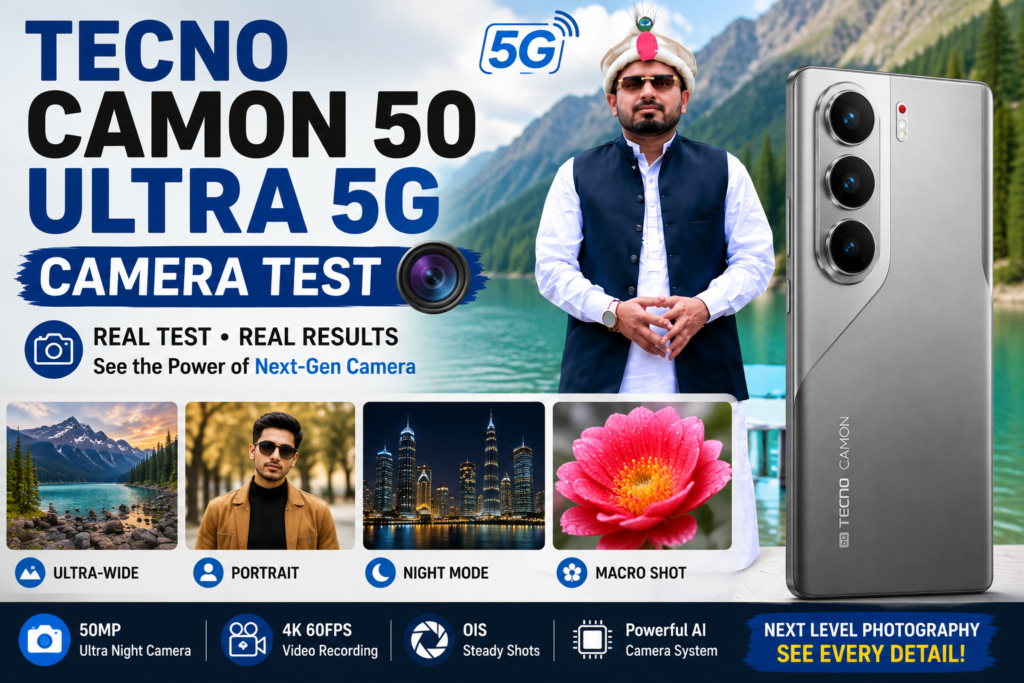
Ultrawide Camera: Useful but Clearly the Weakest Link
The 8 megapixel ultrawide camera does its job for group photos and wide landscape shots, offering a noticeably wider field of view that comes in handy in tight indoor spaces or expansive outdoor scenes.
That said, compared to the main and telephoto lenses, the ultrawide is clearly the weakest performer in the trio. Detail is softer, dynamic range is narrower, and as I mentioned earlier, low light performance drops off significantly faster than the other two lenses. I still found it useful for casual shots where I needed to fit more into the frame, but I would not rely on it as my primary lens for anything I wanted to look genuinely sharp or detailed.
Selfie Camera: A Pleasant Surprise
The front camera on this phone is a 50 megapixel sensor with autofocus, and honestly, this is one of the areas where I felt Tecno went a bit further than I expected for this price range.
Autofocus on the front camera made a real difference in my testing. Group selfies with people at slightly different distances from the camera stayed sharp far more consistently than I am used to seeing on phones without this feature. Skin tones looked natural, and background detail held up reasonably well in good lighting.
In lower light, selfie quality drops off as expected, with some softness and noise creeping in, but overall this remains one of the more capable front facing cameras I have tested at this price point.
Video Recording: Solid for Everyday Use
While photography was my main focus throughout this test, I also spent time recording video across all three rear lenses. Video recording supports high resolution capture across the main, telephoto, and ultrawide cameras, which is worth noting since a lot of competing phones limit their secondary lenses to lower resolution video.
Stabilization felt steady during casual walking shots, and colors stayed fairly consistent when switching between lenses mid recording, which is not always the case on phones in this segment. This is not a device built specifically for serious videography, but for everyday clips, social media content, and casual recording, it handled itself well throughout my testing.
How the Camera App Itself Feels to Use
Beyond the actual image quality, I want to touch on the camera app experience itself, since this affects how enjoyable the phone is to actually use day to day.
The interface felt clean and easy to navigate, with quick access to the different lenses and shooting modes without digging through confusing menus. Switching between the main, ultrawide, and telephoto lenses happened quickly, and the zoom slider felt responsive rather than laggy, which made experimenting with different focal lengths genuinely enjoyable rather than frustrating.
Portrait mode, night mode, and the various shooting options were all easy to find, and I appreciated that the app did not bury useful features behind unnecessary menus the way some phone camera apps tend to do.
Comparing My Experience to What I Expected Going In
Going into this test, I had reasonably high expectations based on how heavily Tecno markets the camera capabilities of this device, and for the most part, those expectations were met or exceeded.
The main camera performance genuinely stood out as one of the strongest I have tested in this price category, and the telephoto zoom capability added a level of versatility that a lot of competing phones simply do not offer. The areas where the phone fell a little short, mainly the ultrawide lens in low light and occasional unnatural detail adjustments in portrait shots, felt like reasonable trade offs given the overall price point rather than dealbreakers.
Who I Would Actually Recommend This Phone To
After weeks of testing, I think this phone makes the most sense for someone who genuinely cares about photography but does not want to spend flagship level money to get a capable camera experience. If you are someone who shares photos regularly on social media, enjoys experimenting with zoom and portrait shots, or simply wants a phone that performs reliably across different lighting conditions without constant disappointment, this camera setup delivers real value.
If you are a more serious content creator who needs professional level video capabilities or the absolute best possible low light performance regardless of cost, you might still want to look at higher end flagship options. But for the price bracket this phone sits in, I genuinely think the camera performance punches above its weight class.
Final Thoughts From My Time With the Camera
Testing the Tecno Camon 50 Ultra 5G camera over these past few weeks has honestly been an enjoyable experience. I went in curious but cautious, since budget friendly phones often overpromise on camera performance, and I came away genuinely impressed by how consistently capable this camera system felt across different situations.
The main sensor handles daylight and even moderate low light conditions with confidence, the zoom capability adds a level of flexibility I did not expect at this price, and the portrait mode consistently produced shots I was happy to share without much additional editing. The ultrawide lens remains the clear weak point of the setup, but even that performed adequately for casual use.
If you are searching for a phone that takes its camera seriously without asking you to pay flagship level prices, my honest recommendation after this camera test is that the Tecno Camon 50 Ultra 5G genuinely deserves a spot on your shortlist.