
Related Articles



Apple has released iOS 26.6.1, and this is one of those iPhone updates that may look small on the surface but deserves serious attention. Unlike major iOS releases that introduce redesigned apps, new features, or noticeable interface changes, iOS 26.6.1 is mainly focused on security.
Apple released the update on August 17, 2026, and it addresses 29 security vulnerabilities affecting supported iPhone models. The update also comes at an important time because Apple is preparing for the next major generation of its mobile operating system.
For everyday iPhone users, the most important message is simple. You may not notice anything different after installing iOS 26.6.1, but that does not mean the update is unimportant. Security updates often work quietly in the background by closing weaknesses that could otherwise be used against a device.
What Is iOS 26.6.1?
iOS 26.6.1 is a point update for iPhones running Apple’s iOS 26 software. It is not designed as a feature packed release. Instead, Apple has used this update to address a collection of security problems found across different parts of the operating system.
According to security information surrounding the release, Apple fixed 29 vulnerabilities identified through CVE entries. A large portion of those issues are connected to WebKit, the technology behind Safari and other web content on Apple devices.
That makes this update particularly relevant because web based attacks are not limited to suspicious websites that users deliberately visit. Modern phones constantly process web content through browsers, applications, advertisements, messages, links, and other services.
Keeping WebKit and other system components updated therefore plays an important role in protecting an iPhone.
Why Are There 29 Security Fixes?
The number 29 is what makes iOS 26.6.1 stand out. Apple is not simply correcting one small bug. The company has addressed vulnerabilities affecting several different components of the operating system.
Some of the fixes involve WebKit, while others affect areas such as image processing, the kernel, audio handling, graphics, and telephony.
Security vulnerabilities can have very different consequences. Some may cause an application to crash, while others can potentially expose information or allow malicious code to execute.
Apple does not always provide dramatic explanations for every security issue, but the existence of a security fix means developers have identified something that should no longer remain exposed.
WebKit Is a Major Part of the Update
One of the biggest areas covered by iOS 26.6.1 is WebKit.
WebKit is Apple’s browser engine and is deeply connected to the way web content works across the company’s platforms. Several WebKit vulnerabilities included in this update could result in memory corruption, crashes, or other security problems when specially crafted web content is processed.
This matters because users do not necessarily need to download an unknown application to encounter dangerous content.
A malicious website, advertisement, link, or other piece of web content can potentially become an entry point when a vulnerable component processes it.
That is why browser security updates should not be ignored simply because someone rarely uses Safari.
A Serious Image Processing Vulnerability
Another important fix involves Apple’s ImageIO component.
ImageIO is responsible for handling different types of image files. According to reports about the security release, Apple addressed a vulnerability that could potentially allow arbitrary code execution when a specially crafted image was processed.
This is one of the more concerning categories of security problems.
Images are everywhere on smartphones. People receive them through messaging apps, emails, social networks, websites, and cloud services. While that does not mean every image is dangerous, vulnerabilities in image processing systems can be particularly important because the operating system automatically handles many image files.
The safest response is not to become afraid of every picture you receive. It is to keep the operating system patched.
Telephony Security Also Gets Attention
iOS 26.6.1 also includes a telephony related security fix.
Reports indicate that a vulnerability could allow an attacker in a privileged network position to bypass IPSec authentication and potentially intercept network traffic.
For the average iPhone owner, this may sound highly technical. However, it demonstrates that the update is not only about Safari or apps.
Apple has addressed problems in areas that affect the underlying communication and security infrastructure of the phone.
Network security is especially important because smartphones are frequently connected to cellular networks, Wi Fi networks, Bluetooth devices, and other communication systems throughout the day.
Kernel Vulnerabilities Were Also Fixed
The iPhone operating system relies on a kernel that manages many fundamental functions. Problems in the kernel can sometimes be more serious than ordinary application bugs because the kernel operates at a highly privileged level.
iOS 26.6.1 includes fixes for several kernel related vulnerabilities. Reports also mention security improvements involving memory handling and other system level components.
Users do not need to understand kernel programming to appreciate why these updates matter.
The basic idea is straightforward. When Apple discovers weaknesses in the parts of iOS that control important system operations, closing those weaknesses helps reduce the opportunities available to attackers.
OpenAI Codex Security Helped Find Some Issues
One interesting detail surrounding iOS 26.6.1 is the involvement of OpenAI’s Codex Security team.
Reports indicate that nine of the vulnerabilities addressed in the update were credited to OpenAI’s Codex Security research.
This is an interesting example of how artificial intelligence is increasingly becoming part of cybersecurity research.
Security researchers and automated systems can examine large amounts of code and identify patterns that may indicate weaknesses. As AI assisted security research becomes more common, companies such as Apple can potentially discover and fix vulnerabilities faster.
For consumers, the important point is not which tool discovered a vulnerability. What matters is that the vulnerability was identified and a fix has now been made available.
Should You Install iOS 26.6.1?
For compatible iPhones, installing iOS 26.6.1 is a sensible decision.
Security updates are different from optional feature updates. If a new feature is not interesting to you, waiting may sometimes feel reasonable. Security patches are different because they are intended to close weaknesses that could affect your privacy and device security.
Apple’s supported range for iOS 26 includes iPhone 11 and newer models.
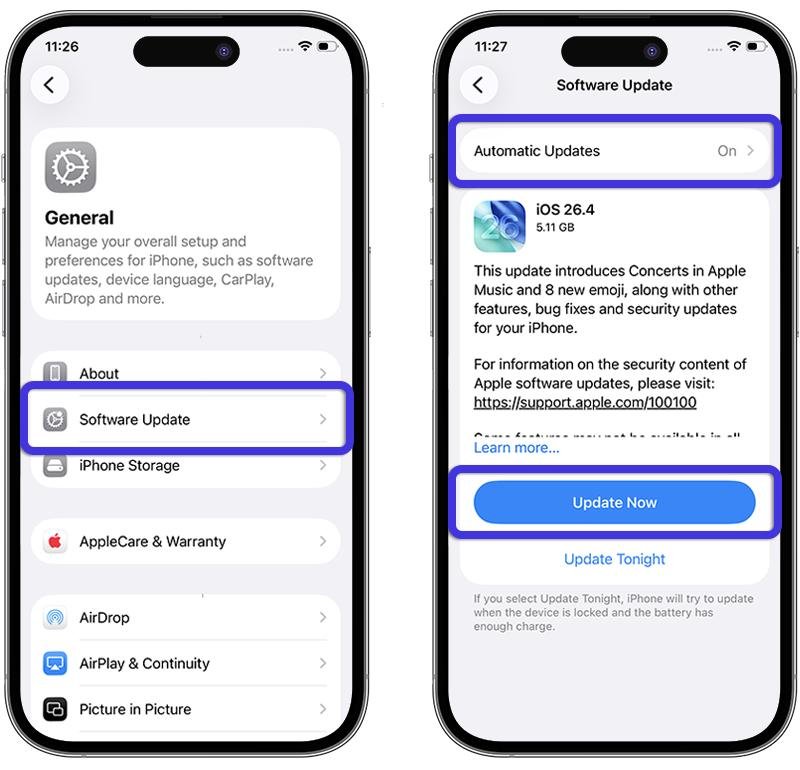
If your iPhone supports the update, you can check for it by opening Settings, selecting General, and then choosing Software Update.
Before installing, it is always a good idea to make sure your important data is backed up and that the phone has enough battery or is connected to power.
What If Your iPhone Cannot Run iOS 26?
Not every iPhone can install iOS 26.
Apple has also provided security updates for older supported devices. Reports indicate that iOS 18.7.10 was released for older iPhones that cannot move to the iOS 26 generation.
This is important because owning an older iPhone does not mean security updates should be ignored.
If your phone cannot install iOS 26.6.1, check whether another security update is available for your specific model. Staying on the latest software version officially offered for your device is generally the safer approach.
There Are No Big New Features to Look For
If you install iOS 26.6.1 and immediately start searching for a completely new feature, you may be disappointed.
This release is primarily about security rather than changing the everyday iPhone experience.
You should not expect a major redesign, a collection of new apps, or a dramatic change to the interface. The value of the update is mostly invisible.
That is actually normal for security releases.
A successful security update can be one that users barely notice because its purpose is to prevent problems before they become visible.
Why Updating Quickly Makes Sense
There is another reason not to delay.
Once security vulnerabilities become publicly documented, attackers and security researchers know more about the weaknesses involved. Even when there is no confirmation that a particular flaw has been actively exploited, leaving an affected device unpatched for a long time can increase unnecessary risk.
A recent government cybersecurity advisory also highlighted the Apple vulnerabilities and urged affected users and administrators to apply the available security updates.
That does not mean every iPhone owner is about to be targeted.
It simply means there is little practical benefit in leaving known security weaknesses unpatched when Apple has already released fixes.
iOS Security Has Become an Ongoing Process
The release of iOS 26.6.1 also shows how smartphone security has changed.
Apple has released several significant security updates during the iOS 26 cycle. The previous iOS 26.6 update itself addressed a large number of security vulnerabilities across different components, including WebKit, the kernel, Wi Fi, Siri, the App Store, and image processing.
This constant cycle of finding and fixing vulnerabilities is not necessarily a sign that iPhones are becoming less secure.
In many ways, it shows how complicated modern operating systems have become.
An iPhone is no longer just a phone. It is a camera, payment device, browser, messaging platform, navigation system, entertainment device, personal computer, and storage system all in one.
That makes security maintenance increasingly important.
What iPhone Users Should Do Now
If you have a compatible iPhone, the process is simple.
Open Settings and go to General. Select Software Update and check whether iOS 26.6.1 is available. If it is, make sure your important information is backed up and then install the update.
You do not need to change your daily habits dramatically.
You should still avoid suspicious links, unknown downloads, and websites that look unsafe. Keep two factor authentication enabled where possible, use strong passwords, and make sure important apps are also updated.
Software security works best as a combination of good habits and timely updates.
Final Thoughts
iOS 26.6.1 may not be the most exciting iPhone update of the year, but it could be one of the most important for users who care about security.
Apple has addressed 29 vulnerabilities across areas including WebKit, ImageIO, the kernel, audio, graphics, and telephony. Some of these flaws could have serious consequences under the right circumstances, including arbitrary code execution, memory corruption, information exposure, and network security problems.
The good news is that users do not have to understand all of the technical details.
The simplest solution is to install the update when it becomes available for your iPhone.
There may be no exciting new button to try after the installation and no major visual transformation. Instead, the benefit is quieter and more important. Your iPhone will have fewer known weaknesses than it had before.
For that reason, iOS 26.6.1 is an update worth taking seriously. If your iPhone supports it, checking for the update today is a small task that can make a meaningful difference to the security of your device.