Related Articles


When people think about electronic displays, they usually imagine bright smartphone screens, computer monitors, televisions, or tablets. These displays produce light directly toward our eyes and are designed to show colorful and moving content. E Ink displays are different. They use a special technology that is designed to look much more like printed paper.
I have always found E Ink technology interesting because it solves a simple problem in a very clever way. Instead of constantly shining light into your eyes, an E Ink display uses tiny particles that move inside small capsules to create text and images. This makes the screen comfortable to read and allows certain devices to use very little power.
E Ink displays are commonly found in electronic readers, digital notebooks, electronic price tags, information boards, and some specialized devices. Their usefulness comes from their ability to remain visible under normal room lighting and even in bright sunlight.
In this article, I will explain how E Ink displays work, why they are different from traditional screens, their major advantages and limitations, and where E Ink technology is most useful.
What Is an E Ink Display?
An E Ink display is an electronic screen that uses tiny particles to create visible text and images. The technology is commonly associated with electronic paper, which is designed to reproduce some of the visual characteristics of printed paper.
Unlike a traditional LCD screen, an E Ink display does not need to continuously produce light to show a static image. Instead, it reflects available light from the environment. This is one of the main reasons E Ink screens are often comfortable to read for long periods.
The technology is particularly popular in electronic book readers because people can read digital books without getting the same bright screen appearance associated with smartphones and tablets.
E Ink displays can show text, simple graphics, and, depending on the type of display, colors. However, their main strength is not high speed or advanced animation. Their biggest advantage is efficient reading and extremely low power consumption.
How E Ink Displays Work
The basic working principle of an E Ink display is easier to understand when we imagine millions of extremely small containers.
Inside the display are tiny microcapsules containing electrically charged particles. In a basic black and white E Ink display, these particles can include black particles and white particles with opposite electrical charges.
An electric field can be applied to these particles. Depending on the electrical signal, the particles move toward the top or bottom of the microcapsule.
When white particles move toward the visible surface, that particular area appears white. When black particles move toward the surface, the area appears black.
By controlling millions of these tiny areas, the display can create letters, numbers, shapes, and images.
This process is fundamentally different from how an LCD or OLED screen creates an image.
The Role of Electronic Ink Particles
The small particles inside an E Ink display are one of the most important parts of the technology.
Imagine a very small transparent capsule filled with liquid. Inside that capsule are microscopic particles that respond to electrical charges. Some particles appear dark while others appear light.
When the display receives an electrical signal, the particles move according to their charge. The movement changes what the viewer sees from the surface of the display.
Once the particles reach their required position, the display can maintain the image without continuously using large amounts of electricity.
This is known as bistability, and it is one of the key features that makes E Ink technology so energy efficient.
What Does Bistability Mean?
Bistability is a term that explains why E Ink displays can consume very little power when showing a still image.
A traditional screen usually needs continuous electrical activity to maintain the displayed image. An E Ink screen can often maintain a static image after the particles have moved into position.
For example, imagine an electronic reader displaying a page of a book. Once the page is displayed, the device does not need to constantly refresh the entire image just to keep the page visible.
Electricity is mainly required when the display changes.
This means that turning several pages can use more energy, while leaving a single page on the screen for a long period can use very little power.
This characteristic is particularly useful for devices that need to operate for days or even weeks between charges.
Why E Ink Looks Like Paper
One of the most noticeable characteristics of an E Ink display is its paper like appearance.
A smartphone screen produces its own light. If you look at a phone in a dark room, the display can still be clearly visible because the screen is producing light.
An E Ink display works differently. It generally reflects light from the environment.
If you are reading an E Ink device in a bright room, sunlight or room lighting illuminates the display surface. The reflected light then reaches your eyes.
This creates a visual experience that is much closer to reading printed paper.
Some E Ink readers also include front lighting. This allows the screen to be used in darker environments without turning the entire display into a bright backlit panel like a conventional LCD.
E Ink vs LCD Displays
LCD displays are used in laptops, televisions, smartphones, monitors, and many other electronic products.
An LCD screen normally uses a backlight behind the display layer. Liquid crystals control how light passes through different areas of the screen.
This technology is excellent for video, gaming, colorful graphics, and fast animation.
E Ink has a different purpose.
An E Ink display is primarily designed for static content and comfortable viewing. It does not usually match an LCD when it comes to refresh speed, video quality, or smooth animation.
However, E Ink has an important advantage when displaying text. It can be highly readable under strong ambient light and can consume very little power when the content remains unchanged.
For reading a long novel, an E Ink display can therefore be a better choice than a conventional bright screen for many people.
E Ink vs OLED Displays
OLED technology is another popular display technology. OLED screens are widely used in modern smartphones, televisions, smartwatches, and premium laptops.
OLED pixels produce their own light. This allows OLED screens to provide excellent contrast, deep blacks, vibrant colors, and fast response times.
E Ink focuses on a different experience.
The strength of E Ink is not spectacular brightness or high refresh rates. Instead, it focuses on readability, low energy consumption, and a paper like viewing experience.
For watching movies or playing fast games, OLED is generally much more suitable. For reading books or displaying information that does not change frequently, E Ink can be more practical.
Why E Ink Uses So Little Power
Power efficiency is one of the biggest reasons E Ink displays have become popular.
The display does not need to continuously illuminate every pixel to keep a static image visible. Once the particles have moved into their required positions, they can remain there.
For this reason, an E Ink device can often stay on the same page for a long time without consuming much display power.
The overall battery life of a device still depends on other components such as the processor, wireless connection, storage, lighting system, and software. However, the display itself can be extremely efficient.
This makes E Ink useful for portable devices where frequent charging is inconvenient.
Where E Ink Displays Are Useful
E Ink technology has many practical applications. Although electronic readers are probably the best known example, they are far from the only use.
Electronic Book Readers
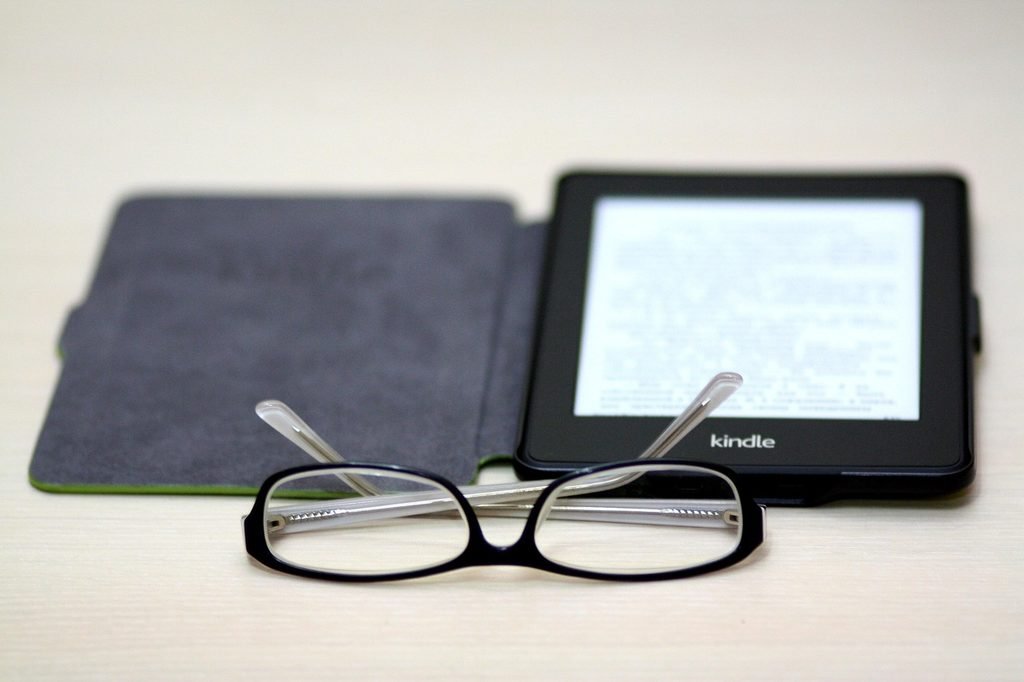
Electronic book readers are one of the most successful applications of E Ink displays.
Devices designed for reading digital books can store thousands of books while offering a display that resembles printed paper.
The screen can remain visible in bright sunlight, making it useful for outdoor reading.
Long battery life is another major advantage. Readers can often use their devices for extended periods without needing to charge them every day.
For someone who spends hours reading novels, textbooks, or other documents, an E Ink reader can provide a focused reading experience without the constant distractions found on a smartphone.
Digital Notebooks
E Ink technology is also used in digital notebooks.
These devices allow users to write notes with a stylus while viewing the content on a paper like display.
Digital notebooks can be useful for students, writers, professionals, researchers, and anyone who takes many handwritten notes.
Instead of carrying several physical notebooks, a person can store many pages digitally.
Some advanced E Ink notebooks also support handwriting recognition, document organization, cloud synchronization, and other productivity features.
Electronic Shelf Labels
Another interesting use of E Ink displays is electronic shelf labeling.
Retail stores can use small E Ink screens to show product prices and other information.
Because prices may remain unchanged for long periods, the low power characteristics of E Ink make it suitable for this purpose.
A store can update prices electronically instead of replacing printed labels manually.
The display can remain visible without continuously consuming large amounts of energy.
Public Information Displays
E Ink can also be useful for displaying information in public spaces.
For example, transportation systems can use electronic paper style displays for schedules, notices, or other information that does not need to change every second.
The strong outdoor readability of E Ink can be valuable in locations where traditional screens may become difficult to read under direct sunlight.
Smart Home Devices
Some smart home products can benefit from E Ink displays.
A device that shows a calendar, weather information, reminders, room information, or energy usage does not necessarily need a bright screen that refreshes constantly.
An E Ink panel can display this information while consuming relatively little power.
This makes it an interesting option for smart home products that need to remain active for long periods.
Wearable Technology
E Ink has also appeared in certain wearable devices.
A watch or wearable device may benefit from a display that remains readable under outdoor lighting while consuming little power.
However, the limitations of E Ink mean that it is not ideal for every type of smartwatch.
Devices that require smooth animations, gaming, video, or very fast interface changes generally benefit more from conventional display technologies.
Advantages of E Ink Displays
E Ink technology has several important benefits.
Excellent Outdoor Readability
One of the biggest advantages is visibility in bright environments.
Because E Ink reflects ambient light, direct sunlight can actually make the display easier to see.
This is very different from many conventional displays that may become difficult to view because of reflections and glare.
Very Low Power Consumption
E Ink displays can consume extremely little power when showing static content.
This makes them excellent for products that need long battery life.
Comfortable Reading Experience
Many people enjoy reading on E Ink because the display has a paper like appearance.
There is no constantly glowing backlight in a basic E Ink screen.
This can make long reading sessions feel more natural for some users.
Lightweight Devices
E Ink technology is well suited to portable products.
Electronic readers and digital notebooks can be relatively thin and lightweight, making them convenient for carrying around.
Information Can Remain Visible
Because the display can hold a static image without continuously refreshing it in the same way as many conventional screens, information can remain visible even when the device is using very little display power.
This is useful for signs, labels, schedules, and other applications.
Limitations of E Ink Displays
E Ink is not perfect. The technology has some important limitations.
Slow Refresh Rate
The biggest limitation is refresh speed.
Traditional LCD and OLED displays can refresh quickly enough for smooth video and animation.
E Ink displays generally change more slowly. Some devices can improve this behavior through specialized refresh modes, but they still are not normally designed for fast moving content.
Limited Suitability for Gaming
Fast games require quick responses and smooth animation.
Although some modern E Ink devices are more capable than older models, E Ink is still not the first choice for serious gaming.
Color Can Be More Limited
Color E Ink technology exists, but it generally does not provide the same vivid and bright color experience as modern OLED and LCD displays.
This makes E Ink better suited to reading, documents, information displays, and simple graphics than applications where rich colors are essential.
Higher Cost in Some Products
The manufacturing process and specialized technology can make some E Ink products more expensive than conventional alternatives.
The price depends on the size, resolution, features, and device category.
Different Types of E Ink Displays
E Ink technology has developed considerably over the years.
Early E Ink displays were mainly designed for black and white content.
Modern versions can provide improved contrast, faster refreshing, better resolution, and color capabilities.
Color E Ink is especially interesting because it expands the technology beyond traditional reading applications.
It can be used for illustrated books, magazines, educational material, artwork, dashboards, and other content where color is useful.
However, color E Ink still follows the basic philosophy of electronic paper rather than trying to compete directly with high brightness OLED screens.
Why E Ink Is Useful for Reading
Reading is probably the clearest example of where E Ink makes sense.
When I compare the purpose of a smartphone with the purpose of an electronic reader, the difference becomes obvious.
A smartphone is designed to do almost everything. It can play videos, run games, display social media, browse websites, take photos, and communicate with other people.
An electronic reader has a much narrower purpose.
Its job is mainly to let you read.
E Ink supports that purpose by providing a simple display that remains readable under different lighting conditions while using very little power.
This combination makes E Ink particularly attractive to people who want a dedicated reading device.
The Future of E Ink Technology
E Ink technology is likely to continue developing as manufacturers find new ways to improve color, speed, resolution, and flexibility.
Flexible electronic paper could open additional possibilities for curved or lightweight products.
Better color technology could make E Ink more attractive for magazines, educational material, advertisements, artwork, and professional documents.
Improved refresh technology could also make the displays more useful for interactive applications.
However, I do not think E Ink will completely replace LCD or OLED technology.
Each display type has a different purpose.
OLED is excellent for entertainment and high quality visuals. LCD remains useful for computers, monitors, and many affordable devices. E Ink is especially strong when low power consumption, readability, and a paper like appearance matter most.
Is an E Ink Display Right for You?
The answer depends on what you want to do with it.
If you mainly read books, documents, or notes, E Ink can be an excellent option.
If you frequently watch movies, play games, edit videos, or work with colorful images, a traditional LCD or OLED display may be more suitable.
For outdoor information boards, electronic shelf labels, digital notebooks, and other devices that display mostly static information, E Ink can offer an efficient solution.
The most important thing is to choose a display based on the job it needs to perform rather than simply choosing the newest technology.
Final Thoughts
E Ink displays are a good example of how technology does not always need to become brighter and more powerful to become more useful.
Instead of trying to compete with televisions and smartphones, E Ink focuses on doing a smaller number of things very well.
Its ability to reflect light, hold static images with very low power consumption, and provide a paper like reading experience makes it especially useful for electronic readers, digital notebooks, electronic shelf labels, information displays, and other specialized devices.
The technology works through tiny charged particles that move inside microscopic capsules when electrical signals are applied. These particles create the visible image, allowing the screen to display information without behaving like a conventional backlit display.
As E Ink continues to improve, we may see it appear in more products and applications. Its combination of readability, efficiency, and low power requirements makes it an important display technology, especially in a world where devices are expected to work longer while using less energy.
For anyone interested in display technology, understanding how E Ink displays work is also a good reminder that the best technology is not always the most powerful one. Sometimes, the best solution is simply the one that matches the task.