Related Articles

Mental math is one of those skills that can make everyday life much easier. Whether you are adding prices while shopping, calculating a discount, checking your change, or helping a child with homework, being comfortable with numbers is useful in many situations. The good thing is that improving mental math does not always require long practice sessions or difficult textbooks. Fun number games can make the learning process much more enjoyable.
I have found that people often learn numbers better when they are having fun. A simple game can encourage the brain to calculate, compare, remember, and solve problems without making the activity feel like traditional studying. This is especially helpful for children and students, but adults can enjoy these games too.
In this article, I will share some of the best fun number games for improving mental math skills. These games can be played at home, in a classroom, with friends, or even on a phone. Most of them require very little preparation, which makes them easy to include in a normal daily routine.
Why Mental Math Skills Are Important
Mental math means solving mathematical problems in your head without depending completely on a calculator or written calculations. It includes basic skills such as addition, subtraction, multiplication, division, estimation, and number comparison.
Strong mental math skills can improve confidence with numbers. When someone becomes comfortable calculating simple problems mentally, more complicated problems often become easier to understand.
Mental math is also useful outside school. For example, you might want to know how much three items will cost before reaching the checkout. You may need to calculate how much money you have left after buying something. You might also want to estimate travel time or divide a bill between several people.
Regular number games provide an enjoyable way to practice these skills. Instead of repeating the same worksheet, players solve different problems while trying to achieve a goal.
1. Number Race
Number Race is a simple game that can be played by two or more people. You only need some paper, a pencil, and a list of numbers.
One person gives a target number, such as 50. Players then have to reach that number using simple addition or subtraction.
For example, a player might start with 10 and continue adding numbers until reaching 50. You can make the game more interesting by setting a time limit.
This game helps improve addition, subtraction, concentration, and quick decision making.
For younger children, use small numbers. Older students can work with larger numbers or include multiplication and division.
2. Mental Math Bingo
Bingo is already a familiar game, but it can easily be turned into a mental math activity.
Create bingo cards containing different numbers. Instead of calling the numbers directly, give players simple math questions.
For example, if the answer is 24, you might say 12 plus 12. Players calculate the answer mentally and mark 24 on their cards.
You can use addition, subtraction, multiplication, or division depending on the player’s ability.
Mental math bingo is particularly useful in classrooms because several students can practice at the same time. It also creates a friendly sense of competition.
3. Make 100
Make 100 is one of my favorite number games because it is simple but encourages players to think carefully.
Start with a number such as 5. Players take turns adding numbers to reach exactly 100.
You can create different rules. For beginners, allow numbers between 1 and 10. For more advanced players, allow larger numbers or multiplication.
The interesting part is that players begin thinking about the future rather than only their current move. They have to consider which number will make the next calculation easier.
This makes the game useful for mental addition and strategic thinking.
4. Number Memory Game
Memory games are not only about remembering words or pictures. Numbers can also be used to improve memory and concentration.
Write several numbers on small cards. Show them to the player for a few seconds and then hide them.
Ask the player to remember the numbers and repeat them in the correct order.
You can make the activity more challenging by asking players to add two of the numbers mentally after remembering them.
For example, show 7, 4, 9, and 6. After hiding the cards, ask the player what 7 plus 9 equals.
This combines memory practice with mental math.
5. Quick Addition Challenge
Quick Addition Challenge is perfect for short practice sessions.
Write several simple addition questions on paper. Instead of asking players to write the answers, ask them to solve each question mentally.
Start with questions such as 8 plus 7 or 15 plus 6. As players improve, introduce larger numbers.
You can add a timer, but I recommend focusing on accuracy before speed. Fast answers are useful, but understanding the calculation is more important.
This game can become part of a daily five minute routine.
6. Multiplication Table Challenge
Multiplication tables are important for developing strong mental math skills. However, memorizing tables can sometimes feel boring.
A game can make the same practice much more enjoyable.
Ask players random multiplication questions instead of going through the tables in order. For example, ask 7 times 8, followed by 6 times 9, and then 4 times 7.
You can give one point for every correct answer.
For children who are still learning multiplication, begin with smaller tables. Once they become comfortable, increase the difficulty.
This game helps improve multiplication recall and mental calculation speed.
7. Number Guessing Game
Number Guessing Game is excellent for teaching number comparison and logical thinking.
Choose a secret number between 1 and 100. The other player tries to guess it.
After every guess, give a clue such as higher or lower.
If someone guesses 40 and the secret number is 65, tell them the number is higher. They can then make a more informed guess.
The game teaches players to understand number ranges and make logical decisions.
You can make it more educational by asking players to explain why they selected each guess.
8. Countdown Number Game
The Countdown Number Game gives players a group of numbers and a target number.
For example, give the numbers 2, 4, 6, 8, and 10 and set the target at 40.
Players must use some or all of the numbers with basic mathematical operations to get as close to the target as possible.
This game is more suitable for older children and students because it requires several steps of thinking.
It can improve mental arithmetic, problem solving, and number flexibility.
9. Shopping Math Game
Shopping is a natural way to practice mental math.
Create a pretend store at home. Give different prices to books, toys, snacks, or other everyday objects.
Give the player a certain amount of pretend money and ask them to buy several items.
For example, if a notebook costs $4 and a pen costs $3, ask how much both items cost.
Later, introduce discounts and change.
This game connects mathematics with real life, which can make the skill feel more meaningful.
10. Dice Math Game
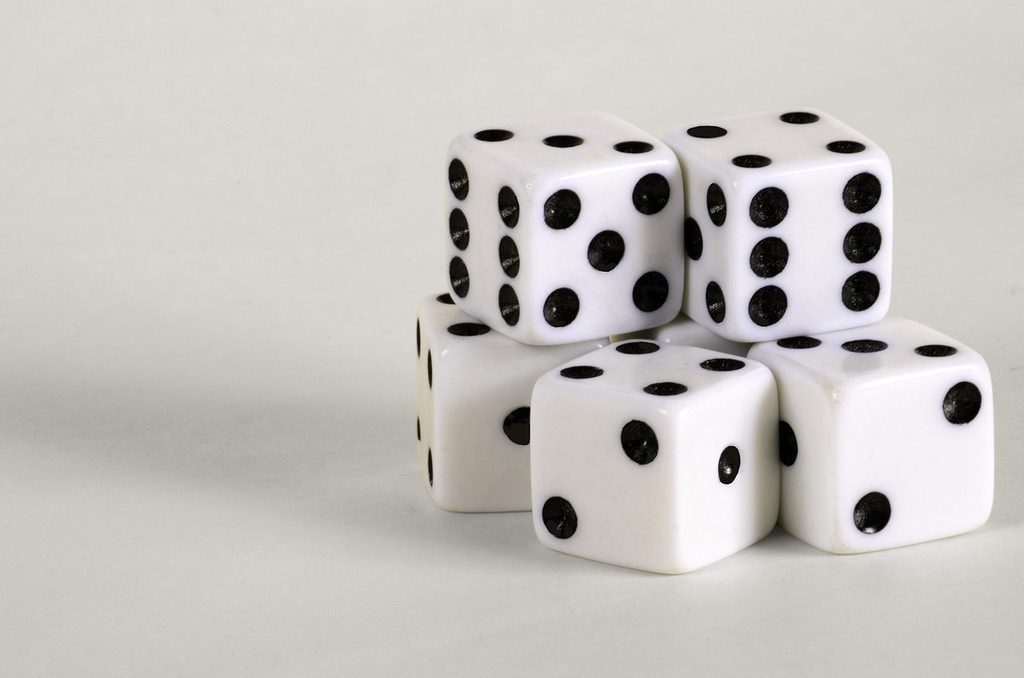
Dice are inexpensive and can be used for many different number games.
Roll two dice and ask the player to add the numbers. Once addition becomes easy, ask them to multiply the numbers.
For example, if the dice show 5 and 4, the player can calculate 5 plus 4 or 5 times 4.
You can use three or four dice for advanced players.
Another variation is to roll dice and create the largest possible number from the results. This encourages players to think about place value.
11. Number Chain
Number Chain is a fast game that works well with groups.
One person starts with a number. The next person performs a calculation and gives the answer to the next player.
For example, the first player says 10. The next player adds 5 and says 15. The following player doubles it and says 30.
You can establish a specific rule before starting, such as addition only or alternating between addition and multiplication.
This game improves concentration because players need to remember the current number while preparing for their turn.
12. Even and Odd Number Game
Learning to identify even and odd numbers is an important basic math skill.
Choose a random number and ask players whether it is even or odd.
To make the game more exciting, give players points for correct answers.
You can also introduce simple calculations. For example, ask whether the answer to 8 plus 7 is even or odd.
This adds another mental step and encourages players to calculate before answering.
13. Math Card Game
A regular deck of playing cards can become a useful math learning tool.
Remove the face cards and use the numbered cards. Give two cards to each player.
Players add their cards together. The player with the highest total wins the round.
For multiplication practice, players multiply the two cards instead.
You can create different versions depending on age and ability.
The biggest advantage is that the game feels like a normal card game while players are actually practicing mathematical calculations.
14. Target Number Game
Choose a target number such as 25, 50, or 100.
Give players several smaller numbers and ask them to find different ways to reach the target.
For example, to make 25, a player might use 10 plus 10 plus 5.
As skills improve, allow multiplication and division.
This game encourages players to see numbers in different ways. That flexibility is an important part of strong mental math skills.
15. Math Around the House
One of the easiest ways to practice mental math is to turn everyday activities into small challenges.
When cooking, ask how many cups or spoons are needed if a recipe is doubled. When organizing objects, ask how many items there are in several groups.
When looking at a clock, ask how many minutes remain until a certain time.
These small questions may not feel like games, but they provide regular mental math practice without requiring a separate study session.
How Number Games Improve Mental Math
Number games work because they encourage repeated practice without making learning feel repetitive.
When players solve calculations again and again, they gradually become more familiar with numbers. They also begin recognizing patterns.
For example, someone who regularly plays multiplication games may eventually remember that 6 times 8 equals 48 without consciously calculating it.
Games can also improve concentration. Players need to listen, remember numbers, and respond at the right time.
Another advantage is confidence. A person who regularly succeeds at small math challenges may feel less nervous when facing mathematical questions at school or in daily life.
Tips for Getting Better at Mental Math
The best results usually come from regular practice rather than very long sessions.
Try spending five to fifteen minutes a day playing a number game. This is enough to build a useful routine without making the activity tiring.
Start with problems that are slightly easier than the player’s current ability. Once the answers become comfortable, increase the difficulty.
Accuracy should come before speed. There is little benefit in answering quickly if most answers are incorrect.
It is also helpful to use different types of games. One game may focus on addition while another develops multiplication, memory, or estimation.
Parents and teachers can also encourage children by celebrating improvement rather than only winning.
Number Games for Different Age Groups
Younger children can begin with counting games, simple addition, number matching, and even or odd number activities.
Elementary school students can practice multiplication, subtraction, mental addition, and number comparisons.
Older students can play target number games, countdown challenges, percentage games, and more complicated mental arithmetic activities.
Adults can also benefit from these games. Mental math is a skill that can be improved through regular practice at almost any age.
The important thing is to choose a difficulty level that feels challenging but not frustrating.
Online Number Games and Mobile Games
Technology has made mental math practice more accessible. There are many online and mobile games that focus on arithmetic, number patterns, multiplication, and problem solving.
The advantage of digital number games is that they often provide instant feedback. Players can immediately see whether an answer is correct.
However, I would not depend entirely on apps. Traditional games with cards, dice, paper, and conversation can be equally useful.
A balanced approach can make math practice more interesting. You might play a physical game with your family one day and use a digital math game the next day.
Why Fun Makes Math Practice Easier
Many people develop a negative feeling toward mathematics because they associate it with difficult homework or tests.
Fun number games can change that experience.
When mathematics becomes part of a game, the focus shifts from getting every answer perfect to solving a challenge. Players become curious about what will happen next.
This can make them more willing to practice.
I also think games create a relaxed environment. A child may avoid a page full of math problems but happily spend fifteen minutes playing a number challenge with a parent.
That difference can have a meaningful effect over time.
Final Thoughts
Fun number games are a simple and practical way to improve mental math skills. They can help with addition, subtraction, multiplication, division, memory, concentration, estimation, and logical thinking.
The best part is that you do not need expensive equipment or complicated lessons. A deck of cards, a few dice, some paper, or even everyday shopping can become an opportunity to practice numbers.
If you are helping a child improve math skills, try starting with easy games and gradually increasing the challenge. If you are an adult who wants better mental arithmetic, short daily games can also make a noticeable difference.
The key is consistency. A few enjoyable minutes of mental math practice each day can be more effective than forcing yourself through a long and boring session once in a while.
Numbers are everywhere, so learning to work with them confidently is a valuable skill. When that learning happens through games, mental math can become something to enjoy rather than something to fear.