
Related Articles


The Google Pixel 11 series has arrived with a familiar design, a new generation Tensor chip, improved cameras, faster wireless charging, and a much stronger focus on artificial intelligence. At first glance, however, the new phones may not look very different from the Pixel 10 generation.
That is exactly what makes the Pixel 11 interesting. Google has chosen refinement instead of a complete redesign. The company has focused on small hardware improvements and bigger software changes, especially around Gemini and photography. For users who already own a recent Pixel phone, the question is simple: are these changes enough to justify an upgrade?
After looking at the new Pixel 11 lineup and early reviews, the answer depends heavily on which phone you currently use.
Pixel 11 Design Keeps the Familiar Look
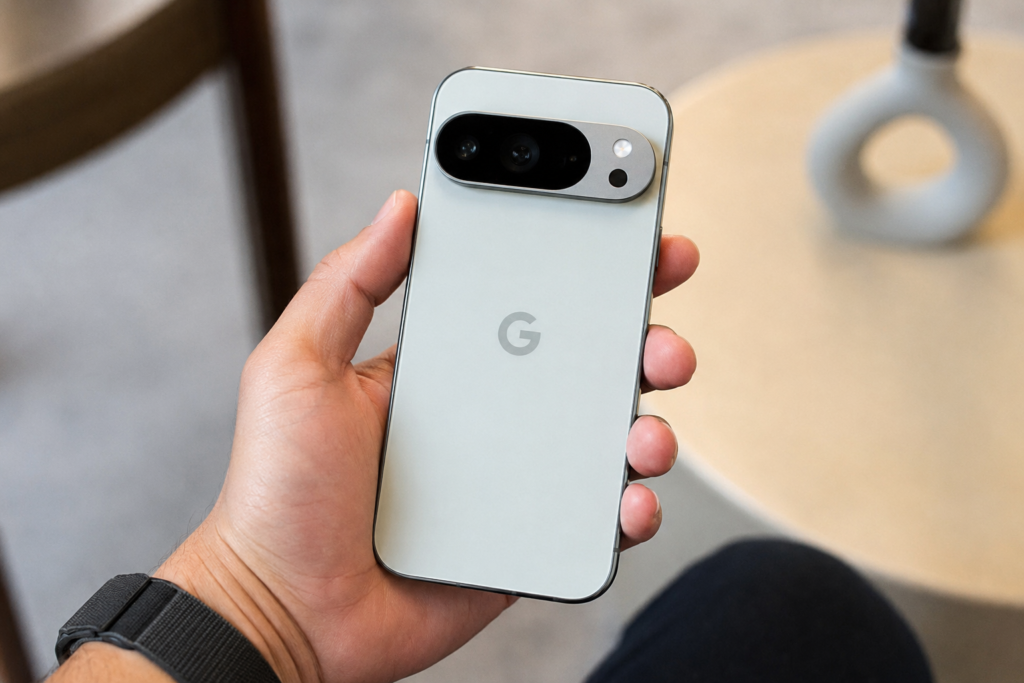
The Pixel 11 series continues the design language Google introduced with recent Pixel generations. The camera bar remains one of the phone’s most recognizable features, but Google has made some noticeable refinements.
The standard Pixel 11 now has an all glass camera bar that is around 40 percent thinner than the previous generation. This makes the rear camera area look less bulky and helps the phone sit more comfortably on a flat surface. Google has also removed the thermometer that appeared on earlier Pixel models.
The overall shape remains familiar, which is not necessarily a bad thing. The Pixel design is already distinctive, and changing it every year would not automatically make the phone better.
Early hands on impressions suggest that the Pixel 11 feels very similar to the Pixel 10 in everyday use. One reviewer also noted that the new phone is around seven grams lighter, which can make a small but noticeable difference when holding it for long periods.
Google has also introduced new colors, including Frost, Obsidian, Hibiscus, and Pistachio. These options give buyers more choice without changing the overall identity of the Pixel series.
Tensor G6 Brings Better Efficiency
One of the biggest changes inside the Pixel 11 series is the new Google Tensor G6 processor.
Google has continued its strategy of designing Tensor chips around artificial intelligence rather than simply chasing benchmark numbers. The Tensor G6 improves CPU performance, power efficiency, connectivity, and on device AI capabilities.
According to early technical analysis, the new Tensor G6 uses newer Arm CPU cores and a MediaTek M90 modem. Google has also improved the Tensor Processing Unit, with reports indicating substantially more AI processing power than the previous generation.
For normal users, however, the difference may not immediately feel dramatic.
Apps open quickly, animations are smooth, and everyday tasks are handled comfortably. But if you are coming from a Pixel 10, you should not expect the kind of performance jump that would completely change the way the phone feels.
That is one of the main themes of the Pixel 11 review experience. The hardware is better, but the improvements are mostly evolutionary.
The Tensor G6 makes more sense when looking at Google’s long term AI strategy. The additional processing power allows more AI features to run directly on the phone, which can improve speed, privacy, and reliability.
Camera Improvements Are More Important
The camera remains one of the strongest reasons to consider the Pixel 11.
Google has made hardware changes to the main camera, while also adding new software tools that make the overall photography experience more flexible.
The standard Pixel 11 gets a larger 48 megapixel wide sensor with improved light sensitivity. Google says the new sensor captures significantly more light than its predecessor.
This matters most in difficult lighting conditions. A better sensor can help produce cleaner images at night, preserve more detail, and give Google’s computational photography system better information to work with.
The Pixel series has already earned a reputation for excellent photography, so Google does not need to completely reinvent its camera system. Instead, the Pixel 11 improves the foundation and then uses software to make the results even more useful.
The new Camera Looks feature is another interesting addition. It gives users more control over the appearance of their photos without requiring complicated editing skills. There are also new AI powered photography tools designed to make capturing and editing images easier.
Google is clearly trying to make the camera experience useful for both casual users and people who enjoy experimenting with photos.
New AI Features Are the Real Story
If there is one area where Google is making a much bigger change, it is artificial intelligence.
The Pixel 11 series is designed around deeper Gemini integration. Google is moving beyond simple voice commands and basic AI assistants toward a system that can provide more proactive help.
Some of the new features are designed to understand what users are doing and provide assistance at the right moment. Google’s goal is to make the phone feel more personalized without requiring users to constantly open an AI application.
Another example is Rambler, a voice and text feature that can handle natural speech, including corrections and changes in thought. Early reviews suggest that it can be useful, although it may not immediately feel like a must have feature for everyone.
This approach reflects Google’s broader strategy. Instead of competing only through specifications, the company wants the Pixel to stand out through software.
That could become increasingly important as smartphone hardware becomes more mature.
Storage Finally Gets a Useful Upgrade
One of the most practical changes to the standard Pixel 11 is the increase in base storage.
The Pixel 11 now starts with 256GB of storage instead of the lower capacity offered on previous generations. The phone also includes 12GB of RAM.
This is a welcome change because storage is one of those specifications that users notice more as time passes.
Modern phones are used for high resolution photos, 4K video, games, offline streaming, large applications, and increasingly large AI models. Having 256GB as the starting point means buyers have more room before they need to worry about deleting files or paying for a more expensive storage option.
It also makes the standard Pixel 11 more competitive against other premium Android smartphones.
Faster Wireless Charging
Charging has historically been an area where Pixel phones have not always matched the fastest Android competitors.
Google has made a step forward with the Pixel 11 by supporting faster Qi2.2 wireless charging. The standard model supports up to 25W wireless charging, compared with the slower wireless charging capability of the previous generation.
This may sound like a small change, but wireless charging is something many people use every day.
If you place your phone on a charging stand at your desk or beside your bed, faster charging can make the feature more useful.
Google has also continued to focus on battery efficiency. The company claims more than 30 hours of battery life, although battery performance will naturally depend on usage, network conditions, screen brightness, and other factors.
Display Improvements Are More Subtle
The Pixel 11 does not completely reinvent the display.
The standard Pixel 11 continues with a 6.3 inch OLED panel, while the Pro models offer brighter displays. Google has also introduced improved glass designed to provide better scratch resistance.
For everyday use, the display remains one of the phone’s strengths.
Colors look rich, text is sharp, and the high refresh rate makes scrolling feel smooth. However, people upgrading from a recent Pixel may not immediately notice a dramatic difference.
This is another example of Google’s overall approach with the Pixel 11. The company is polishing something that already worked instead of rebuilding it.
Pixel 11 Price Makes the Decision Harder
The standard Google Pixel 11 starts at $899, putting it firmly in the premium smartphone category.
At this price, buyers naturally expect more than minor hardware improvements.
The good news is that Google has closed the gap between the standard Pixel 11 and the Pixel 11 Pro in several areas. The standard model gets the same Tensor G6 processor and 12GB of RAM, while also offering 256GB of starting storage.
That makes the standard Pixel 11 an attractive option for people who want a flagship Android phone without paying Pro level pricing.
The Pro models still offer advantages for photography enthusiasts, especially with their more advanced camera hardware and brighter displays.
For many buyers, however, the standard Pixel 11 could be the better balance between price and features.
Should Pixel 10 Owners Upgrade?
This is probably the most important question.
If you already own a Pixel 10, the Pixel 11 does not provide enough hardware change to make upgrading an obvious decision.
Early reviews repeatedly describe the Pixel 11 as an incremental improvement. One review even suggested that some of the improvements could have arrived through software rather than requiring a new generation of hardware.
Pixel 10 owners already have a fast processor, strong cameras, a modern display, and Google’s latest software experience.
The Pixel 11 offers better cameras, faster wireless charging, more storage, improved AI capabilities, and a refined design. These are useful improvements, but they are not essential for most existing Pixel 10 users.
If your Pixel 10 is working well, keeping it for another year could make financial sense.
Who Should Buy the Pixel 11?
The Pixel 11 makes much more sense for people coming from an older smartphone.
Someone using a Pixel 7, Pixel 8, or another older Android phone will experience a much larger improvement.
The newer camera system, Tensor G6 processor, larger starting storage, modern design, improved charging, and deeper Gemini integration create a strong overall package.
The Pixel 11 is also appealing to people who prioritize Google’s software experience over maximum gaming performance.
This is an important distinction. Google continues to focus heavily on AI, photography, security, and clean Android software rather than competing purely on raw specifications.
Final Verdict
The Google Pixel 11 series is not a revolutionary smartphone generation, and that is probably the most accurate way to describe it.
Google has made a collection of sensible improvements rather than introducing one enormous hardware feature.
The thinner camera bar makes the design cleaner. The new main camera improves an already strong photography system. Tensor G6 provides better AI capabilities and efficiency. Base storage has increased to 256GB. Wireless charging is faster. Gemini is becoming more deeply integrated into the phone.
Individually, these changes may not sound exciting. Together, they create a more polished smartphone.
For Pixel 10 owners, the upgrade is difficult to justify unless they specifically want the camera improvements, additional storage, or new AI features. For people coming from an older phone, however, the Pixel 11 is a much more attractive proposition.
The biggest lesson from the Pixel 11 series is that smartphone innovation is changing. The yearly hardware revolution is becoming less common, while software and artificial intelligence are becoming more important.
Google appears comfortable with that direction.
The Pixel 11 may not look dramatically different from last year’s phone, but it shows where Google believes smartphones are heading next. Instead of trying to make the phone completely different every year, the company is making small hardware improvements while giving software a much larger role.
For many users, that may actually be the smarter approach.