A Shift Beyond Basic Communication
In 2026, smartphones no longer feel like simple communication devices. They have evolved into powerful mini computers that can handle complex tasks with ease. This shift did not happen suddenly, but over time, phones have gained more capabilities, better performance, and smarter systems. Today, many people rely on their smartphones for work, entertainment, learning, and daily management, just like they once depended on computers.
Earlier, phones were mainly used for calling, texting, and basic internet browsing. But now, they offer a wide range of functions that were once limited to desktops and laptops. This change has made smartphones an essential part of modern life.
Powerful Performance in a Small Device
One of the main reasons smartphones feel like computers is their performance. Modern devices are equipped with advanced processors that can handle multiple tasks at the same time. These processors are faster, more efficient, and designed to manage heavy workloads without slowing down.
You can now edit videos, play high-quality games, attend virtual meetings, and run multiple apps simultaneously on your phone. Tasks that once required a full computer can now be completed in the palm of your hand. This level of performance has changed how people view smartphones.
Advanced Operating Systems
Another important factor is the development of advanced operating systems. Smartphone software has become more flexible and capable. It allows users to multitask, manage files, and customize their experience.
Modern operating systems support features like:
- Split-screen multitasking
- Background processing
- File management systems
- App integration across platforms
These features make smartphones feel closer to computers in terms of functionality. Users can switch between tasks easily and manage their work more efficiently.
Productivity on the Go
Smartphones in 2026 are powerful productivity tools. Many people now use their phones for work-related tasks such as writing documents, creating presentations, and managing emails.
Cloud services also play a major role in this transformation. Files can be stored online and accessed from any device. This means you can start a task on your computer and finish it on your phone without any interruption.
With the help of apps and cloud integration, smartphones have become portable workstations that fit in your pocket.
Improved Display and User Experience
The display quality of modern smartphones has improved significantly. Larger screens, higher resolution, and better touch response make it easier to perform complex tasks.
These improvements allow users to:
- Edit documents comfortably
- Watch high-quality videos
- Interact with apps smoothly
The user experience is now more refined, making smartphones suitable for tasks that once required bigger screens.
Storage and Memory Capabilities
Storage and memory have also improved in modern devices. Smartphones now come with large storage capacities that can hold thousands of files, photos, and apps.
In addition, increased memory (RAM) allows phones to run multiple applications without slowing down. This makes multitasking smooth and efficient, similar to using a computer.
Users no longer need to worry about limited space or performance issues as much as they did in the past.
Connectivity and Integration
Connectivity is another reason smartphones feel like mini computers. High-speed internet, cloud services, and wireless connections allow devices to stay connected at all times.
Smartphones can now connect with:
- Laptops and desktops
- Smart TVs
- Wearable devices
- Home automation systems
This level of integration creates a connected ecosystem where the phone acts as a central hub. It controls and communicates with other devices, just like a computer.
Software Ecosystem and Apps
The app ecosystem has grown significantly. There are now apps for almost everything, from professional tools to creative software. Many of these apps offer features similar to desktop applications.
For example:
- Video editing apps with advanced tools
- Graphic design apps for creating visuals
- Office apps for documents and spreadsheets
These apps allow users to perform complex tasks directly on their phones, reducing the need for traditional computers.
Security and Data Management
Modern smartphones also include advanced security features. These features protect user data and ensure safe usage.
Common security improvements include:
- Biometric authentication (fingerprint and face recognition)
- Encrypted storage
- Secure app environments
These features make smartphones reliable for storing and managing important information, similar to computers.
Entertainment Without Limits
Smartphones are not just for work—they are also powerful entertainment devices. Users can stream movies, play high-quality games, and explore virtual experiences.
With improved graphics and faster processors, gaming on smartphones has reached a new level. Many games now offer experiences similar to console or PC gaming.
This combination of work and entertainment makes smartphones versatile devices that meet multiple needs.
Portability as a Major Advantage
One of the biggest advantages of smartphones is portability. Unlike traditional computers, smartphones are lightweight and easy to carry. This allows users to stay productive and connected wherever they go.
You no longer need to sit at a desk to complete tasks. Everything you need is available in your pocket. This flexibility is one of the key reasons smartphones have become so important.
The Blending of Devices
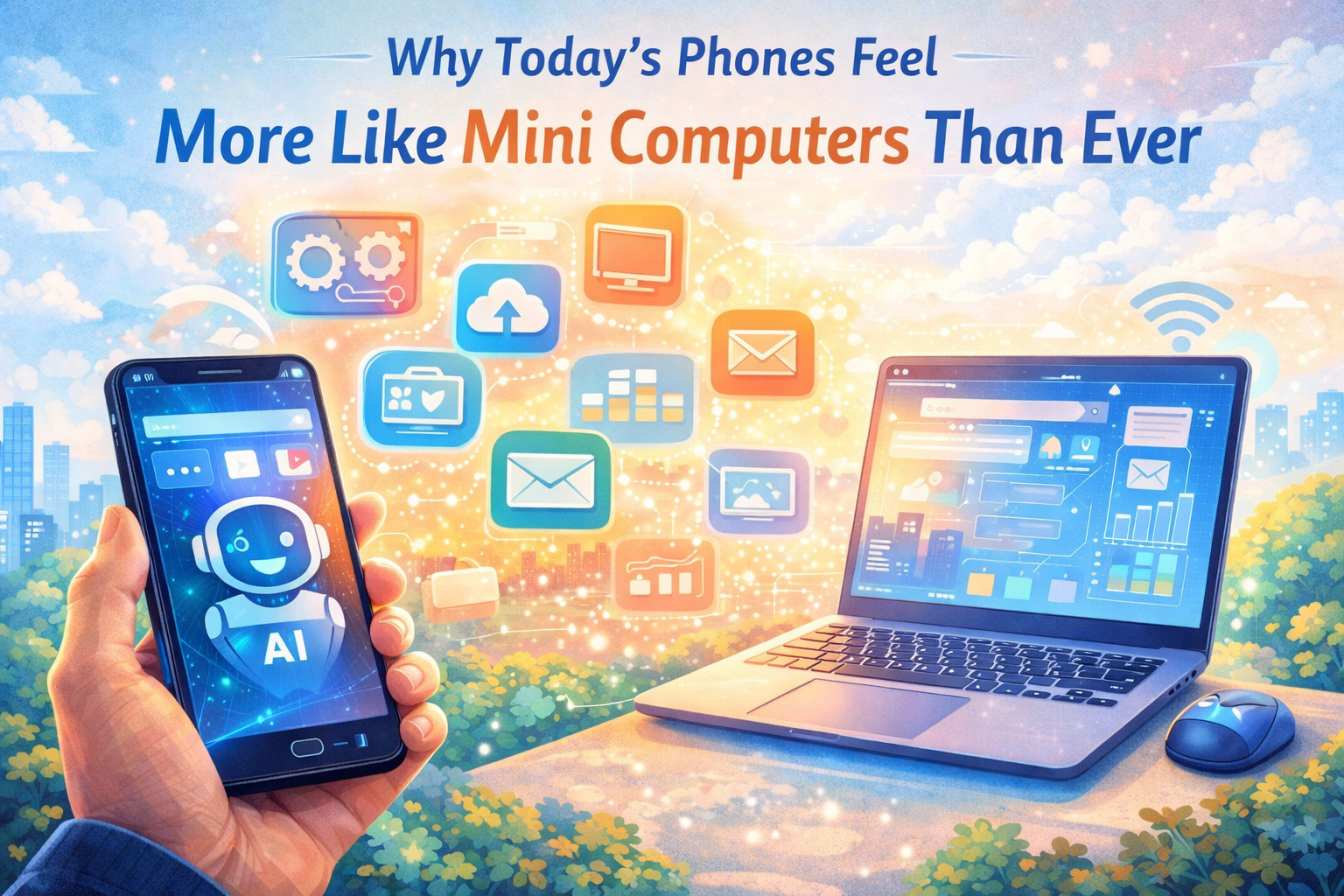
In 2026, the line between smartphones and computers is becoming less clear. Many smartphones can connect to external screens, keyboards, and accessories to create a desktop-like experience.
This means a single device can serve multiple purposes:
- A phone for communication
- A computer for work
- A media device for entertainment
This blending of functions shows how far smartphones have come.
Conclusion
Today’s smartphones feel more like mini computers because they offer powerful performance, advanced software, and a wide range of capabilities. They can handle tasks that were once limited to traditional computers, all within a compact and portable device.
This evolution has changed how people work, communicate, and entertain themselves. Smartphones are no longer just tools—they are essential devices that support nearly every part of modern life.