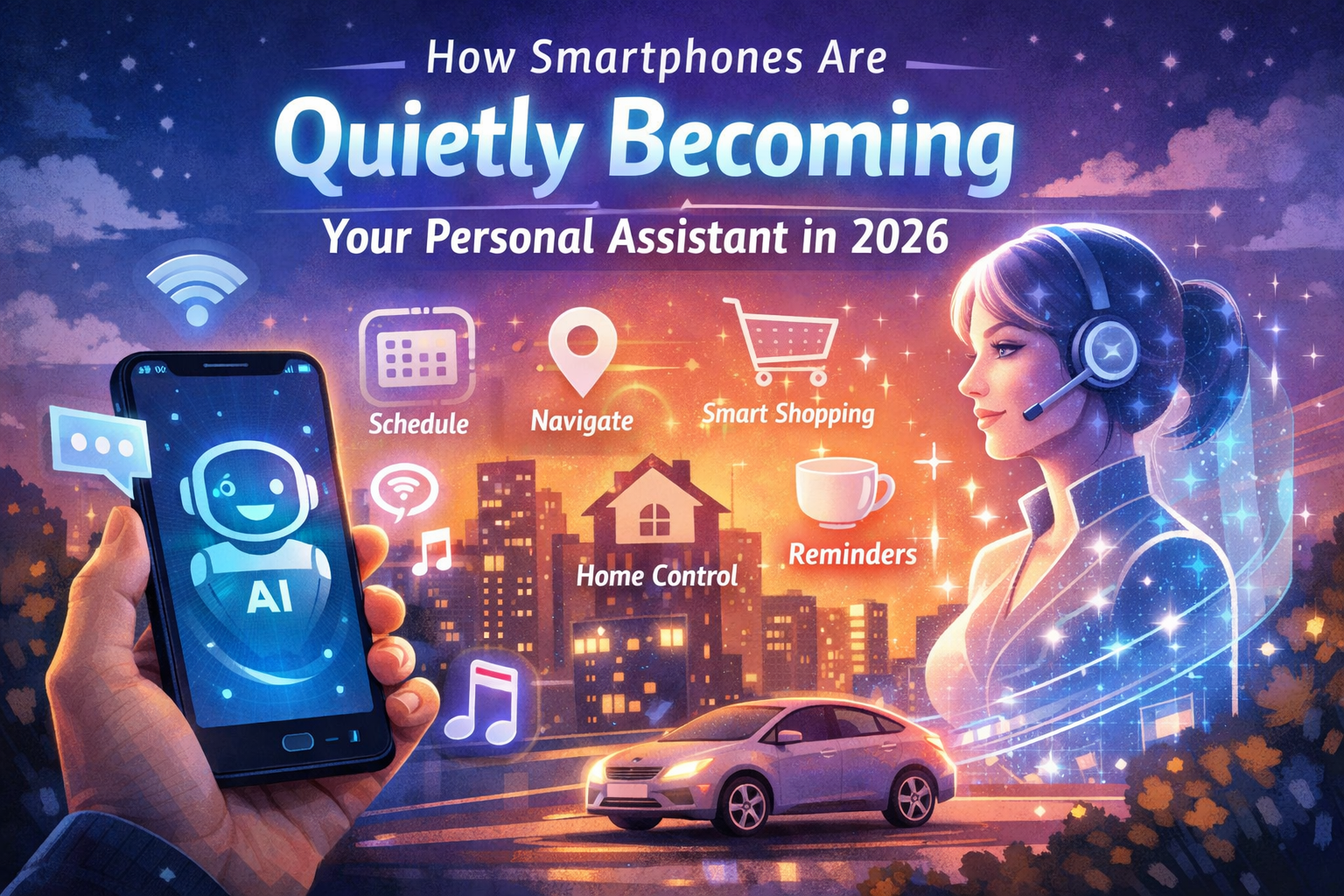
In 2026, smartphones are no longer just devices we use for calling, texting, or scrolling through social media. They have quietly transformed into something much more powerful—your personal assistant. This change did not happen suddenly. Instead, it has been growing slowly over the years, almost without people noticing. Today, your phone can remind you of tasks, suggest what to do next, and even understand your habits better than you expect.
Let’s explore how smartphones are becoming personal assistants and why this shift matters so much in our daily lives.
A Silent Transformation
If you look back just a few years, smartphones were mostly reactive. You opened an app, typed something, and got a result. The phone only responded to your commands. But in 2026, things are different.
Now, your phone does not always wait for instructions. It watches patterns, learns your behavior, and takes small actions on its own. For example, it may remind you to leave for work early because it knows traffic is heavy. It might suggest ordering food when it notices you usually eat at a certain time.
This change feels natural because it happens quietly. There is no big announcement or dramatic feature. But step by step, your phone is becoming more helpful without asking for attention.
Understanding Your Daily Routine
One of the biggest reasons smartphones feel like personal assistants is their ability to understand routines. Your phone learns when you wake up, when you sleep, and what apps you use the most.
For example:
- It knows your usual commute time
- It tracks your sleep patterns
- It remembers your favorite apps and websites
Because of this, your phone can give suggestions before you even think about them. If you open your phone in the morning, you might see weather updates, news, or reminders already prepared for you.
This is not magic. It is the result of advanced software and machine learning working in the background.
Smart Notifications That Actually Help
In the past, notifications were often annoying. They would pop up all the time and distract you. But in 2026, notifications have become smarter.
Now, your phone decides what is important and what can wait. It may delay less important alerts and show urgent ones first. It can even group notifications based on your priorities.
For example:
- Work messages may appear during office hours
- Entertainment notifications may show in the evening
- Important alerts like banking or security always come first
This makes your phone feel more organized, like a real assistant who knows what matters to you.
Voice Assistants Are More Natural
Voice assistants have improved a lot in recent years. In 2026, talking to your phone feels more natural than ever.
You don’t need to use specific commands anymore. You can speak normally, and your phone understands. For example, instead of saying a fixed phrase, you can just say:
“Remind me to call my friend later tonight.”
Your phone understands the meaning and sets the reminder correctly.
It can also follow conversations. You can ask one question, then another related one, and your phone keeps track of the context.
This makes interaction smooth and easy, like talking to a real person.
Helping You Stay Organized
Smartphones now help manage your life in a simple way. They can:
- Schedule meetings
- Set reminders
- Track tasks
- Suggest daily plans
For example, if you have a busy day, your phone may show a clear schedule with time slots. It may also suggest when to take breaks or when to leave for appointments.
Instead of using multiple apps, your phone brings everything together in one place.
Learning Your Preferences
Another important change is how phones learn your preferences. They remember what you like and what you don’t.
For example:
- Your favorite music style
- The type of videos you watch
- Your shopping habits
Because of this, your phone can suggest content that feels personal. It saves time because you don’t need to search again and again.
Over time, your phone becomes more accurate in its suggestions. It feels like it knows you better each day.
Helping Without Being Noticed
One of the most interesting things about modern smartphones is how they help without being obvious. Many features work in the background.
For example:
- Battery optimization adjusts based on your usage
- Apps run smoothly without manual updates
- Security systems protect your data automatically
You don’t need to think about these things. Your phone handles them quietly.
This is why smartphones feel effortless. They do a lot, but they don’t make you feel overwhelmed.
Health and Wellbeing Support
Smartphones are also becoming helpful in health and wellbeing. They can track:
- Steps and physical activity
- Sleep patterns
- Screen time
Your phone may suggest going for a walk if you have been inactive. It might remind you to sleep earlier if you are staying up late.
Some devices even monitor stress levels and suggest ways to relax.
This makes your phone more than just a device—it becomes a tool for better living.
Privacy and Trust
As smartphones become smarter, privacy becomes more important. People want to feel safe while their phones learn about them.
In 2026, many devices focus on protecting user data. They process information on the device instead of sending everything to the cloud.
This means:
- Your data stays more secure
- You have more control over your information
- Your phone works smarter without risking privacy
Trust is a key part of making smartphones feel like personal assistants.
Reducing Effort in Everyday Life
The biggest advantage of smartphones acting as personal assistants is reducing effort. Small tasks that used to take time are now automatic.
For example:
- Auto-filling forms
- Remembering passwords
- Suggesting replies to messages
These features save time and make daily life easier.
You don’t need to think about every small detail. Your phone handles many things for you.
The Emotional Connection
Interestingly, people are starting to feel a connection with their phones. Not in a human way, but in a practical sense.
When your phone understands your needs, helps you stay organized, and supports your routine, it becomes an important part of your life.
It feels reliable. It feels helpful.
This emotional connection is one reason why smartphones are becoming more personal.
What This Means for the Future
The shift we are seeing in 2026 is just the beginning. Smartphones will continue to improve and become even more helpful.
In the future, we may see phones that:
- Predict problems before they happen
- Offer smarter advice
- Understand emotions better
The goal is not to replace humans, but to support them.
Conclusion
Smartphones in 2026 are no longer just tools. They are becoming personal assistants that quietly support your daily life.
They understand your habits, organize your schedule, and reduce your effort. They work in the background, making life easier without demanding attention.
This transformation is subtle, but powerful. And as technology continues to grow, the role of smartphones will only become more important.