The Beginning of Predictive Technology
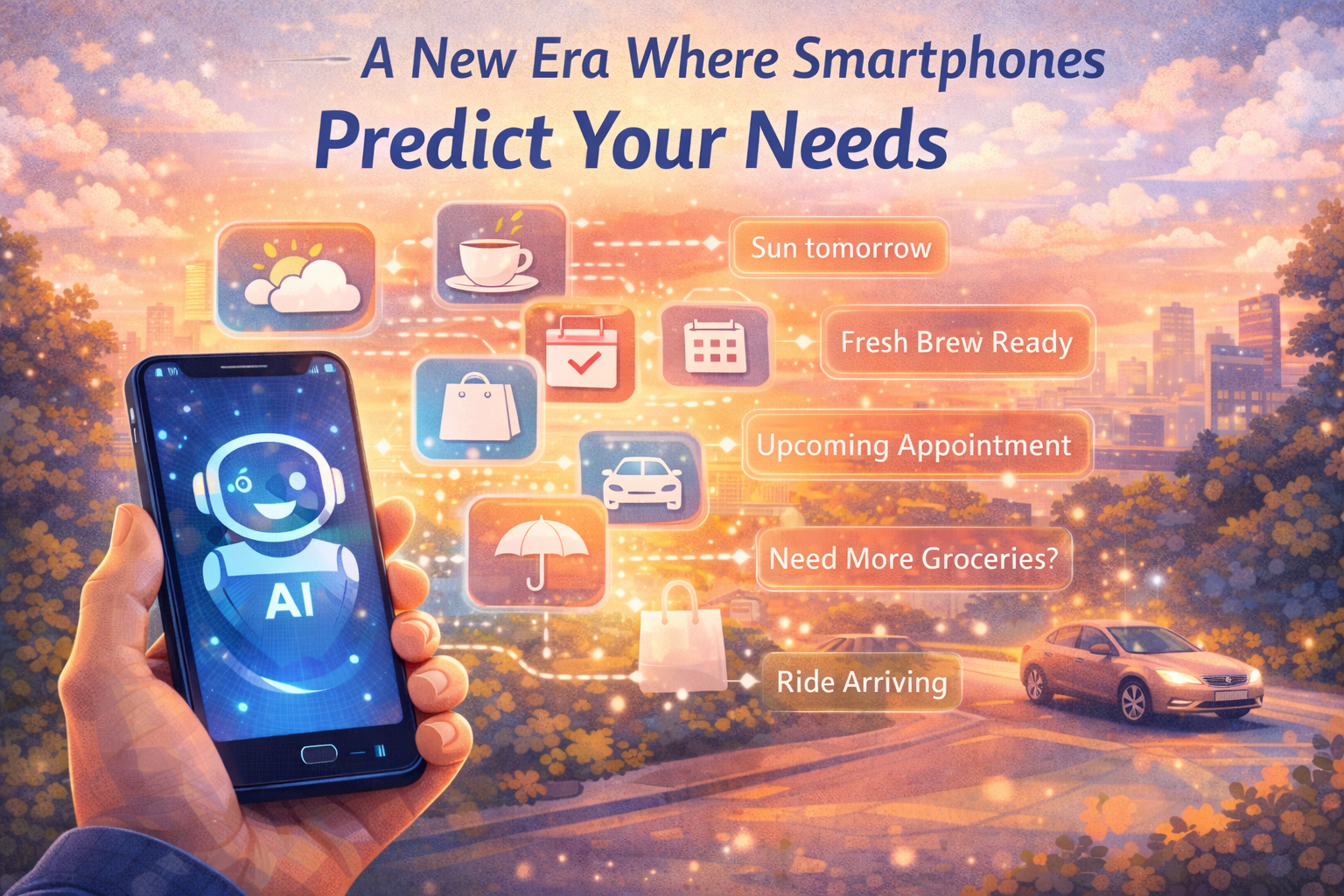
In 2026, smartphones have entered a new phase where they do more than respond—they predict. This shift marks the beginning of an era where devices understand what users might need before they even ask. It is not about guessing randomly, but about learning patterns, analyzing behavior, and using that knowledge to make smart decisions.
This predictive ability has changed how people interact with their phones. Instead of searching, typing, and managing everything manually, users now receive suggestions and support automatically. The experience feels smoother, faster, and more natural.
How Phones Learn Your Habits
At the core of this transformation is the ability of smartphones to learn from daily behavior. Every time you use your device, it collects small pieces of information. Over time, these details form a clear picture of your routine.
Your phone learns things like:
- When you usually wake up
- Which apps you use the most
- Your common travel routes
- Your daily schedule
Using this data, the phone begins to understand what you are likely to do next. This is how it starts predicting your needs in a meaningful way.
Smart Suggestions That Save Time
One of the most noticeable features of predictive smartphones is smart suggestions. These suggestions appear at the right time and are often exactly what you need.
For example, your phone may:
- Suggest navigation when you are about to leave home
- Show reminders before an important meeting
- Recommend music based on your current activity
These suggestions reduce the need to search or think about the next step. They save time and make everyday tasks easier.
Understanding Context in Real Time
Prediction is not only based on past behavior. Smartphones in 2026 also understand real-time context. They combine information like location, time, and activity to make accurate decisions.
For instance, if you are at a new place, your phone may suggest nearby services. If it detects that you are moving quickly, it may assume you are traveling and adjust its features accordingly.
This ability to combine past habits with present conditions makes predictions more useful and reliable.
Reducing Mental Effort
One of the biggest benefits of predictive smartphones is the reduction of mental effort. In the past, users had to think about every small task—what to open, where to go, and what to do next.
Now, many of these decisions are supported by the device. The phone offers options, organizes tasks, and simplifies choices. This allows users to focus on more important things instead of managing small details.
Personalization at a Deeper Level
Prediction also leads to deeper personalization. Smartphones do not just learn general habits—they learn individual preferences.
For example:
- Your favorite type of content
- Your preferred communication style
- Your daily routine patterns
Because of this, every user experiences their phone differently. The device adapts to each person, making it feel more personal and relevant.
Invisible Technology at Work
One interesting aspect of this new era is that most predictive features are invisible. They work in the background without requiring attention.
Users do not need to activate these features or manage them constantly. The phone handles everything quietly, making the experience feel effortless.
This invisible support is what makes modern smartphones so powerful without feeling complicated.
Balancing Help and Control
While prediction is helpful, it is also important to maintain user control. Smartphones in 2026 are designed to assist, not take over completely.
Users can still make their own decisions and adjust settings when needed. The goal is to provide guidance without limiting freedom.
This balance ensures that technology remains supportive rather than overwhelming.
Improving Daily Life
Predictive smartphones are improving daily life in many ways. They help users stay organized, manage time better, and reduce unnecessary effort.
For example:
- Keeping track of schedules
- Offering reminders at the right moment
- Simplifying routine tasks
These improvements may seem small individually, but together they create a smoother and more efficient lifestyle.
Looking Toward the Future
The ability of smartphones to predict needs will continue to grow. Future devices may become even more accurate and responsive.
They may understand user behavior in greater detail and offer more advanced support. However, the focus will remain on simplicity and ease of use.
The goal is to make technology feel natural, not complicated.
Conclusion
The rise of predictive smartphones in 2026 marks the beginning of a new era in mobile technology. Devices are no longer just tools—they are intelligent systems that understand and anticipate user needs.
By learning habits, analyzing context, and offering timely suggestions, smartphones are making life easier and more organized. This transformation is shaping a future where technology supports users quietly and effectively.
As this trend continues, smartphones will become even more integrated into daily life, helping users without demanding attention.