
Related Articles



Learning does not always have to happen through textbooks, worksheets, and long study sessions. Sometimes, students learn faster when they are having fun. Educational games can turn difficult subjects into enjoyable activities that encourage children and students to think, solve problems, remember information, and stay interested in learning.
I have always found that games can make learning feel less like a task and more like an activity that students actually want to do. A good educational game gives learners a chance to practice important skills while keeping them engaged. Whether a student wants to improve mathematics, vocabulary, science knowledge, memory, or logical thinking, there are many games available for different ages and learning levels.
In this guide, I will share some of the best educational games for students and young learners. These games are suitable for home learning, classroom activities, study breaks, and family learning time. The goal is not simply to keep children busy. The right game can help them develop useful skills that can support their education in the long term.
Why Educational Games Are Useful for Students
Educational games can make difficult concepts easier to understand. When students interact with a game, they are not only reading information. They are making decisions, testing ideas, remembering instructions, and solving problems.
One major advantage of learning games is that they can increase motivation. A student who finds mathematics difficult may not enjoy solving a page of equations. However, a math game with levels, challenges, and rewards can make the same type of practice feel more enjoyable.
Games can also encourage students to learn from mistakes. In many educational games, getting an answer wrong simply means trying again. This creates a comfortable environment where learners can practice without feeling embarrassed.
Another benefit is active learning. Instead of simply listening to information, students participate in the learning process. This can help them pay attention for longer periods and remember what they have learned.
1. Math Games for Building Number Skills
Math games are among the most useful educational games for young learners. They can help children practice counting, addition, subtraction, multiplication, division, fractions, and basic problem solving.
For younger children, simple counting games are a great starting point. A game may ask children to count objects, match numbers, or identify the larger number. These activities can help build basic number confidence.
Older students can use games that involve multiplication tables, mental mathematics, percentages, fractions, and mathematical puzzles. These games provide repeated practice without making students feel like they are completing the same worksheet again and again.
Math games are especially helpful when students need extra practice. A few minutes of gameplay each day can reinforce concepts learned in school.
2. Word Games for Improving Vocabulary
Vocabulary is an important part of reading and writing. Word games can help students discover new words and understand spelling, meanings, and sentence structure.
Crossword puzzles are a classic example. Students need to understand clues and remember vocabulary to complete the puzzle. Word searches can also help younger learners recognize words and become familiar with spelling.
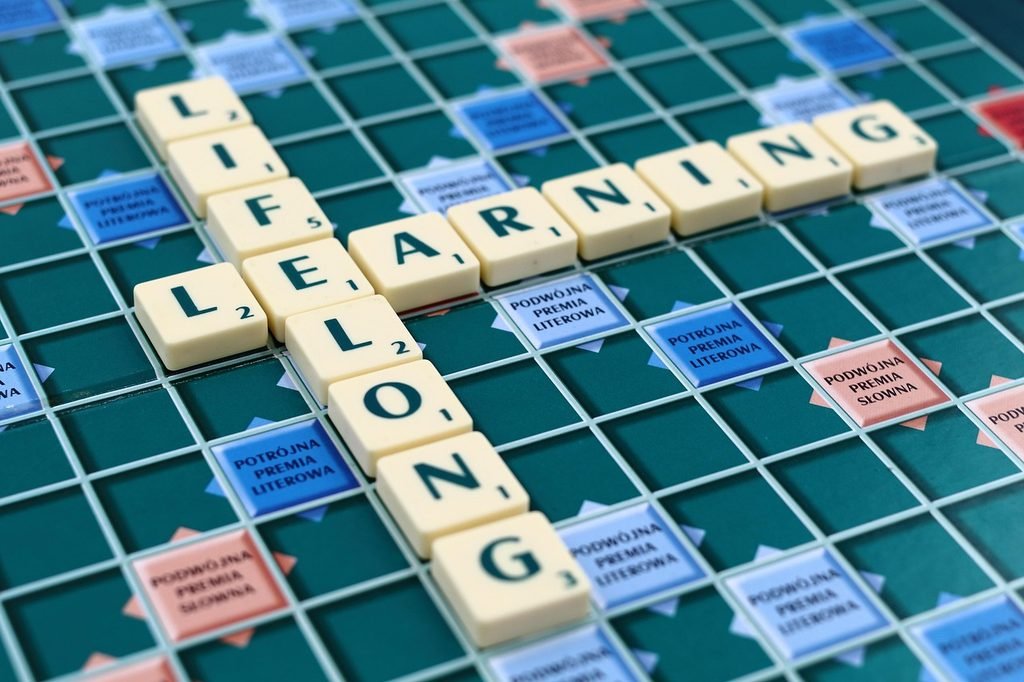
Scrabble style games can be useful for older children because they encourage players to create words from available letters. This can develop vocabulary while also encouraging strategic thinking.
Simple spelling games are another good choice. They can ask students to arrange letters into words, correct spelling mistakes, or complete missing letters.
The biggest advantage of word games is that students can learn new vocabulary naturally while trying to complete a challenge.
3. Science Games for Curious Young Learners
Science is a subject based on curiosity, observation, and discovery. Educational science games can help students explore topics such as animals, plants, space, the human body, weather, energy, and the environment.
For young children, matching games can introduce basic science concepts. For example, children can match animals with their habitats or identify different parts of a plant.
Older students may enjoy science quizzes and simulation games. These can introduce concepts that might otherwise seem complicated.
Space games can also be very engaging. Students can learn about planets, stars, the solar system, and space exploration through interactive activities.
Science games are valuable because they encourage learners to ask questions. A child may start with a simple game about planets and become interested in learning more about astronomy afterward.
4. Memory Games for Better Concentration
Memory games are simple but effective educational activities. They can help children practice concentration, observation, and recall.
A traditional matching card game is one of the easiest examples. Players turn over cards and try to remember where matching pairs are located.
Digital memory games often use pictures, numbers, sounds, or patterns. Students need to remember information and reproduce it correctly.
These games can be useful during short study breaks. Instead of immediately switching to entertainment content, students can spend a few minutes playing a memory game that still challenges their minds.
Memory activities can also be adapted for different age groups. Younger children can work with pictures and colors, while older students can use numbers, words, and more complicated patterns.
5. Puzzle Games for Logical Thinking
Puzzle games are excellent for students who enjoy challenges. They can develop logical reasoning, pattern recognition, problem solving, and patience.
Sudoku is one well known example. Players need to place numbers according to specific rules. The game starts simply but becomes more challenging as the puzzle gets harder.
Jigsaw puzzles can also support visual thinking. Children need to identify shapes, colors, and relationships between different pieces.
Logic puzzles provide another useful activity. Students may need to determine the correct order of objects, identify patterns, or solve a mystery using clues.
I particularly like puzzle games because there is usually more than one mental skill involved. Students are not simply memorizing an answer. They are thinking about how to reach the answer.
6. Geography Games for Learning About the World
Geography games can make learning about countries, cities, continents, oceans, and landmarks much more interesting.
A simple world map quiz can ask students to identify countries by their location. Other games may show a country’s flag and ask the player to identify the country.
Geography games can also introduce famous landmarks. Students may learn about mountains, rivers, deserts, historical sites, and major cities while playing.
These games are especially useful for visual learners. Seeing a map and interacting with different locations can make geographical information easier to remember.
Parents and teachers can also use geography games as an introduction to world cultures. Once students learn where a country is located, they may become curious about its language, food, history, and traditions.
7. Typing Games for Computer Skills
Computer skills are increasingly important for students. Typing games can help young learners become more comfortable with keyboards while improving typing speed and accuracy.
Typing games often turn keyboard practice into a challenge. Students may need to type words quickly or complete sentences before time runs out.
For beginners, accuracy should be more important than speed. Students should first learn where the keys are and develop comfortable typing habits.
As their confidence improves, they can work on increasing their speed.
Typing games are a good example of an educational activity that provides a practical skill. The ability to type efficiently can help students complete school assignments, research information, and communicate online.
8. Coding Games for Young Students
Coding games have become increasingly popular because they introduce computer programming through simple challenges.
Young learners do not necessarily need to start by writing complicated code. Many beginner coding games use visual blocks that students can arrange to control characters or objects.
These activities teach concepts such as sequences, instructions, loops, conditions, and problem solving.
For example, a game may ask students to guide a character through a maze. The learner needs to decide which instructions will move the character in the correct direction.
Coding games can help students understand that computers follow instructions exactly. If something goes wrong, they need to examine their instructions and find the problem.
This makes coding games useful not only for computer education but also for logical thinking.
9. Reading Games for Young Learners
Reading games can help children develop confidence with letters, sounds, words, and sentences.
For beginners, alphabet games are a useful starting point. Children can learn letter recognition by matching uppercase and lowercase letters or identifying letters from pictures.
Phonics games can help children connect letters with sounds. This is an important step toward reading words independently.
Older children can use reading comprehension games. These activities provide a short passage followed by questions. Students need to understand the text before choosing their answers.
Reading games can be particularly helpful for children who do not enjoy traditional reading exercises. A game format can make practice feel more approachable.
10. History Games That Make the Past Interesting
History can sometimes feel like a long list of names and dates. Educational games can present historical information in a more interactive way.
History quizzes can help students remember important events, people, places, and time periods.
Timeline games are also useful. Students may need to arrange historical events in the correct order. This helps them understand how different events relate to one another.
Some educational games use stories and simulations to place students in historical settings. These experiences can make the subject feel more connected to real life.
The purpose should not be to replace history books. Instead, history games can work as additional practice that helps students remember information.
11. Creative Games for Developing Imagination
Not every educational game needs to focus on academic subjects. Creative games can help children develop imagination, communication, and decision making.
Building games are a good example. Students can create houses, cities, machines, or imaginary worlds. While playing, they need to think about design, structure, and organization.
Storytelling games can also be valuable. Children can create characters and develop simple stories around them.
Drawing and design activities encourage visual creativity. They allow young learners to experiment with shapes, colors, and ideas.
Creative games are important because education is not only about remembering facts. Students also need to learn how to create, communicate, and express their ideas.
12. Financial Games for Older Students
Basic financial knowledge is an important life skill. Educational money games can introduce students to concepts such as saving, spending, budgeting, and decision making.
A simple game might give a player a certain amount of virtual money and ask them to decide how to spend it.
More advanced games can introduce budgets and unexpected expenses. Students learn that money is limited and choices have consequences.
These activities can provide a gentle introduction to financial responsibility. Parents can also use them as a starting point for conversations about saving money and making thoughtful purchases.
How to Choose the Best Educational Games
There are many educational games available, but not every game is suitable for every student. The best choice depends on age, ability, interests, and learning goals.
First, check the age recommendation. A game designed for very young children may be too easy for an older student.
Next, consider the subject. If a child needs help with multiplication, a math game may be more useful than a general knowledge quiz.
It is also important to look at the difficulty level. A game should be challenging enough to encourage thinking without becoming frustrating.
Parents should also pay attention to advertisements, in app purchases, privacy settings, and online interaction. A game can be educational while still containing features that may not be suitable for every child.
Benefits of Educational Games in Learning
Educational games can provide several benefits when used properly.
They can improve motivation because students have a clear goal to work toward. They can also encourage problem solving because players must make decisions to progress.
Games can support memory by giving students repeated opportunities to practice information. They may also improve concentration when learners need to pay attention to patterns, instructions, or changing situations.
Another important benefit is confidence. When students successfully complete a challenge, they receive immediate feedback that shows them their progress.
Educational games can also encourage independent learning. A student can choose a game based on a personal interest and practice without needing constant supervision.
Tips for Parents and Teachers
Educational games work best when they are part of a balanced learning routine.
Parents can encourage children to play learning games for a reasonable amount of time rather than allowing unlimited gameplay. Short sessions can be enough to practice a particular skill.
Teachers can use educational games as classroom activities, warm up exercises, revision tools, or rewards after completing academic work.
It is also helpful to discuss the game afterward. Ask children what they learned, which challenge they found difficult, and how they solved a problem.
This conversation can turn a simple game into a deeper learning experience.
Final Thoughts
The best educational games for students and young learners are the ones that combine learning with genuine enjoyment. Math games can strengthen number skills, word games can improve vocabulary, science games can encourage curiosity, and puzzle games can develop logical thinking.
There are also educational games for reading, geography, history, coding, typing, memory, creativity, and financial awareness. This variety means that almost every student can find a learning activity that matches their interests.
In my view, educational games should not completely replace books, teachers, or traditional study methods. Instead, they should be used as another useful learning tool. When games are chosen carefully and used in moderation, they can make education more interactive and enjoyable.
The most important thing is to choose games that give students something meaningful to think about. A good educational game does more than keep a child entertained. It encourages curiosity, practice, patience, creativity, and problem solving.
For parents and teachers looking for new ways to support young learners, educational games can be a simple and enjoyable addition to everyday learning. With the right balance, play and education can work together to help students become more confident and enthusiastic learners.