Introduction
For many years, people believed that cleaner transportation would require sacrifice. They thought choosing eco-friendly options would mean less power, less comfort, and less convenience. But in 2026, this idea has completely changed.
Today, transportation is becoming cleaner without any major compromise. Electric vehicles (EVs) and modern technologies are proving that we can protect the environment while still enjoying performance, comfort, and efficiency.
This shift is not just a technological change—it is a mindset change. In this article, we will explore how transportation became cleaner without sacrifice and why this transformation is so important.
The Old Belief: Clean Means Compromise
Early Challenges of Eco-Friendly Vehicles
In the early days, eco-friendly vehicles had many limitations. Electric cars had:
- Short driving range
- Slow charging times
- Limited speed and performance
- Basic designs
Because of these issues, people believed that going green meant giving up comfort and reliability.
Dependence on Fuel for Performance
Fuel-powered vehicles were known for their strength and performance. They offered:
- Long driving range
- Quick refueling
- High speed and power
This made people feel that traditional vehicles were the only practical choice.
The Turning Point: Technology Changed Everything
Improvement in Battery Technology
One of the biggest breakthroughs was in battery technology. Modern EV batteries are:
- More powerful
- Longer lasting
- Faster to charge
This solved the problem of limited range and made electric vehicles suitable for daily and long-distance travel.
Fast and Convenient Charging
Charging is no longer slow and inconvenient. In 2026:
- Fast chargers can power vehicles in less than an hour
- Home charging is common
- Charging stations are widely available
This makes electric mobility as convenient as traditional refueling.
Better Design and Performance
Electric vehicles today are designed to compete with, and often outperform, fuel-powered cars.
They offer:
- Instant acceleration
- Smooth driving experience
- Modern and stylish designs
This proves that clean transportation does not mean sacrificing performance.
How Transportation Became Cleaner
Zero Emissions Driving
Electric vehicles do not produce harmful exhaust gases. This reduces:
- Air pollution
- Greenhouse gas emissions
- Environmental damage
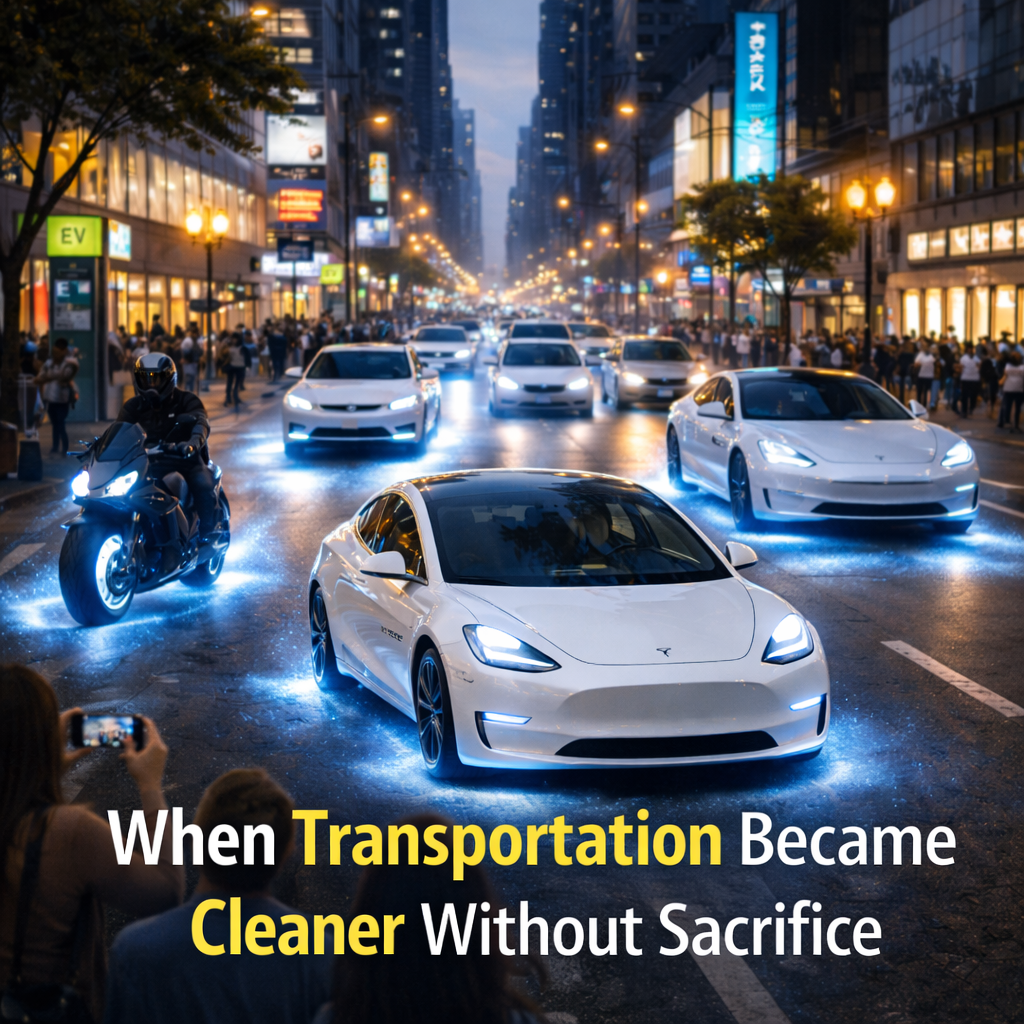
Cities are becoming cleaner as more EVs replace traditional vehicles.
Use of Renewable Energy
Electric vehicles can be powered by renewable energy sources like solar and wind. This creates a fully clean system where energy production and usage are both environmentally friendly.
Efficient Energy Use
Electric motors are more efficient than fuel engines. They convert more energy into movement, wasting less power.
This efficiency means:
- Less energy consumption
- Lower costs
- Better performance
No Sacrifice in Comfort and Experience
Smooth and Quiet Driving
Electric vehicles provide a calm and quiet driving experience. Without engine noise and vibration, driving becomes more relaxing.
This improves:
- Driver comfort
- Passenger experience
- Overall journey quality
Advanced Technology Features
Modern EVs are equipped with smart features such as:
- Digital dashboards
- Voice controls
- Driver assistance systems
- Real-time navigation
These features make driving easier and more enjoyable.
Spacious and Modern Interiors
Without large engines, EVs offer more interior space. Designers can create:
- Comfortable seating
- More legroom
- Better storage options
This enhances the overall user experience.
Economic Benefits Without Compromise
Lower Running Costs
Electric vehicles are cheaper to run compared to fuel-powered cars. Electricity costs less than petrol or diesel.
Users also benefit from:
- Home charging
- Reduced fuel expenses
- Long-term savings
Reduced Maintenance Needs
EVs have fewer moving parts, which means less maintenance. There is no need for:
- Oil changes
- Engine repairs
- Complex mechanical servicing
This saves both time and money.
Government Incentives
Many governments offer financial support for EV buyers. These include:
- Tax reductions
- Subsidies
- Registration benefits
This makes electric vehicles more affordable.
Impact on Daily Life
Cleaner Cities and Healthier Living
As transportation becomes cleaner, cities experience:
- Better air quality
- Reduced noise pollution
- Improved public health
People can live in healthier environments with fewer pollution-related problems.
Convenience in Daily Use
Electric vehicles are easy to use in daily life. Charging at home eliminates the need to visit fuel stations frequently.
Drivers can manage their vehicles using mobile apps, making the experience more convenient.
Changing Consumer Mindset
People are now more aware of environmental issues. They prefer solutions that are both practical and sustainable.
Electric mobility meets these expectations without requiring major sacrifices.
Challenges That Are Being Overcome
Initial Cost Concerns
Although EVs can be expensive upfront, long-term savings make them a smart investment.
As production increases, prices are gradually decreasing.
Charging Infrastructure Expansion
Charging networks are still growing in some areas. However, rapid development is improving accessibility.
In the near future, charging will be as common as fuel stations.
Battery Recycling and Sustainability
Battery disposal is an important issue. Companies are developing better recycling systems to ensure environmental safety.
The Future of Clean Transportation
Continuous Innovation
Technology will continue to improve electric mobility. Future developments may include:
- Faster charging
- Longer battery life
- Wireless charging systems
These innovations will make EVs even more convenient.
Wider Global Adoption
More countries are adopting electric mobility. Businesses, governments, and individuals are all moving toward cleaner transportation.
This global trend is accelerating change.
A Sustainable Transportation System
Clean transportation is not just a trend—it is a long-term solution. It supports sustainability while maintaining comfort and efficiency.
Conclusion
Transportation has reached a point where it can be cleaner without sacrifice. Electric vehicles and modern technologies have removed the need to choose between performance and sustainability.
In 2026, we can enjoy smooth driving, advanced features, and lower costs while also protecting the environment. This balance is what makes electric mobility so powerful.
The future of transportation is not about giving something up—it is about gaining a better, cleaner, and smarter way to move forward.