
A New Layer of Understanding
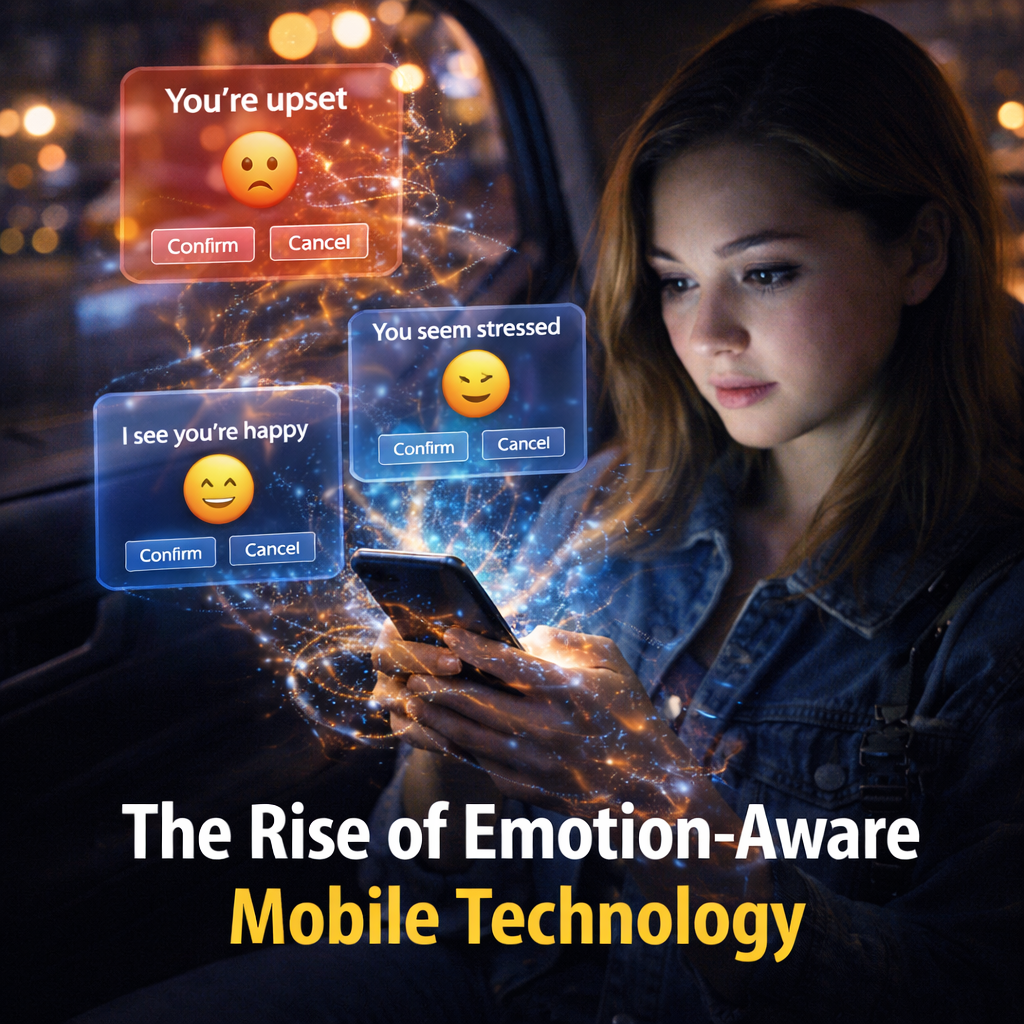
In 2026, smartphones are not just smart—they are becoming more aware of human emotions. This does not mean they can feel emotions like humans, but they can detect patterns that suggest how a user might be feeling. This new ability is changing how people interact with their devices.
Emotion-aware technology is one of the most interesting developments in mobile innovation. It adds a human-like layer to smartphones, making them more responsive and supportive in daily life.
Understanding Emotions Through Behavior
Smartphones do not read emotions directly. Instead, they analyze behavior and patterns. They look at things like:
- Changes in typing speed
- Usage patterns
- Activity levels
- Sleep habits
For example, if a user is less active than usual or spends more time on certain apps, the phone may detect a possible change in mood. These signals help the device respond in a more thoughtful way.
Smarter Responses Based on Mood
Once a smartphone detects certain patterns, it can adjust its responses. This is where emotion-aware technology becomes useful.
For instance, a phone may:
- Suggest calming music if stress is detected
- Reduce notifications during busy or overwhelming moments
- Recommend breaks when usage becomes too intense
These actions are small, but they create a more supportive experience.
Improving User Wellbeing
One of the main goals of emotion-aware technology is to support user wellbeing. Smartphones are no longer just about productivity—they are also about balance.
They can help users:
- Take breaks from screen time
- Maintain healthy routines
- Stay aware of their habits
By offering gentle suggestions, phones encourage healthier behavior without forcing it.
More Natural Interaction
Emotion-aware smartphones also improve interaction. Devices respond in ways that feel more natural and less mechanical.
For example:
- Adjusting tone in voice assistants
- Offering softer suggestions during certain times
- Prioritizing positive or helpful content
This creates an experience that feels more human-centered.
Personalization at a Deeper Level
This technology takes personalization to a new level. It is no longer just about preferences—it is about understanding the user’s state.
The phone adapts not only to what you like, but also to how you feel at different times. This makes the experience more meaningful and relevant.
Balancing Sensitivity and Privacy
As smartphones become more aware, privacy becomes even more important. Emotion-related data is sensitive, and users want control over it.
In 2026, many devices process this information locally, meaning it stays on the phone instead of being shared. This helps protect user privacy while still allowing smart features to work.
Subtle Support, Not Control
Emotion-aware technology is designed to support, not control. It does not force users to change behavior. Instead, it offers gentle suggestions and adjustments.
Users can choose to follow or ignore these suggestions. This ensures that the phone remains helpful without becoming intrusive.
Applications in Daily Life
This technology is already being used in different ways in daily life. For example:
- Helping users manage stress
- Supporting better sleep habits
- Encouraging healthier screen usage
These applications show how smartphones are becoming tools for overall wellbeing, not just productivity.
A Step Toward Human-Centered Technology
The rise of emotion-aware smartphones reflects a larger trend—technology becoming more human-centered. Devices are no longer designed only for function, but also for comfort and support.
This shift makes smartphones feel less like machines and more like companions that understand user needs.
The Future of Emotion-Aware Devices
As technology continues to evolve, emotion awareness will likely improve. Future smartphones may become even better at understanding subtle changes in behavior.
They may:
- Offer more accurate suggestions
- Provide deeper support for mental wellbeing
- Adapt instantly to emotional changes
The focus will remain on making technology more helpful and less stressful.
Conclusion
In 2026, emotion-aware mobile technology is adding a new dimension to smartphones. By understanding behavior and responding thoughtfully, devices are becoming more supportive and personalized.
This innovation is not about replacing human emotions, but about creating technology that respects and adapts to them. As this trend continues, smartphones will play an even bigger role in improving both productivity and wellbeing.