Understanding Before You Act
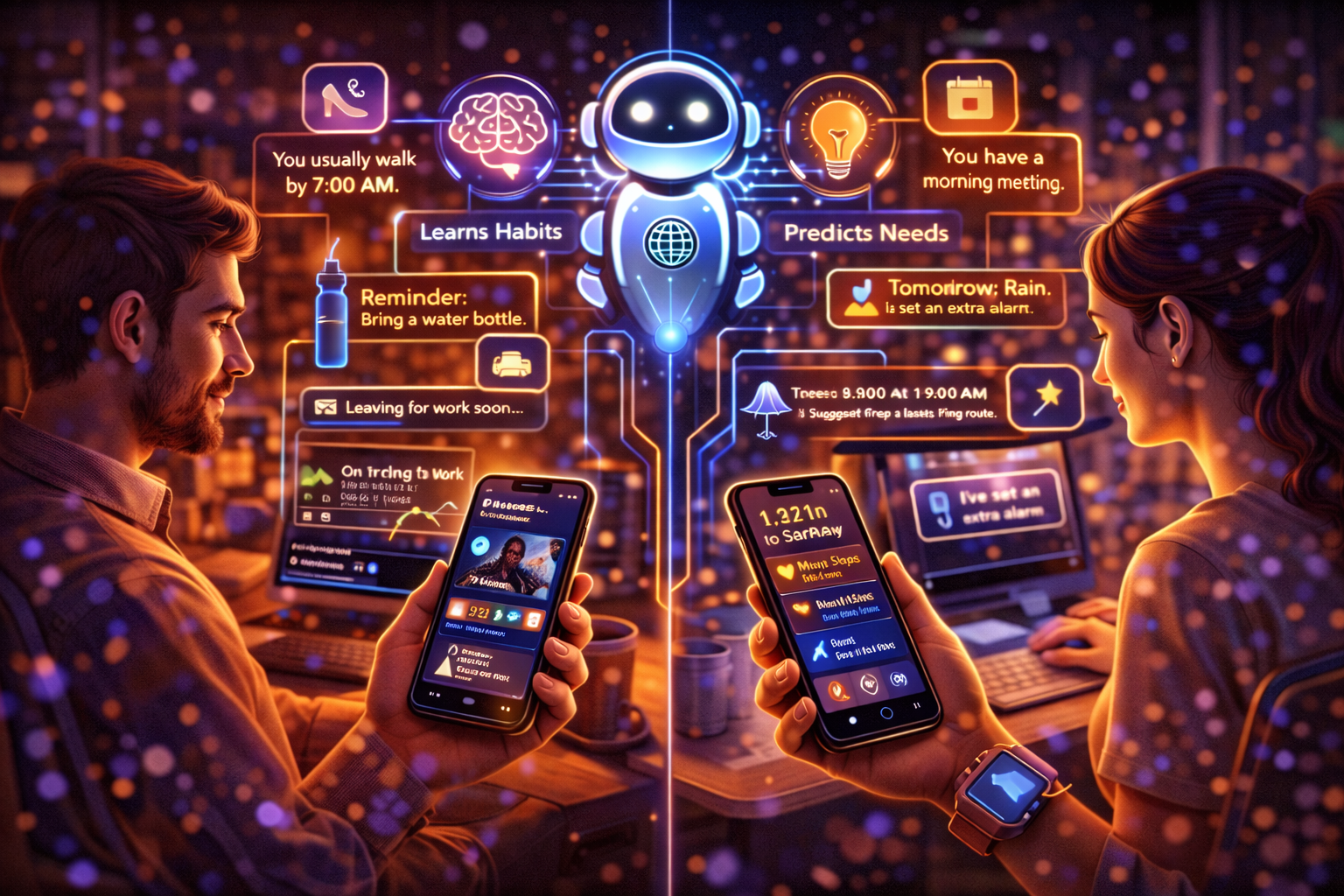
In 2026, smartphones have reached a point where they no longer wait for users to take action. Instead, they anticipate behavior. This means your device can understand what you are likely to do next and prepare for it in advance. It is not about guessing randomly, but about learning from patterns and making informed decisions.
This shift has changed how people interact with their phones. Instead of controlling every step, users now experience a system that works alongside them.
Learning Through Daily Patterns
The foundation of anticipation lies in learning. Smartphones observe how users behave throughout the day and build patterns over time.
They track:
- When you use certain apps
- How often you check notifications
- Your daily routine and habits
By analyzing this information, the phone starts to understand what actions are likely to come next. This learning process is continuous, meaning the device becomes more accurate the more you use it.
Predicting the Next Move
Once a smartphone understands patterns, it begins to predict actions. These predictions are not random—they are based on past behavior and current context.
For example, your phone may:
- Suggest opening a specific app at a certain time
- Remind you about tasks before deadlines
- Prepare navigation before you leave
These small predictions make the experience smoother and faster.
The Role of Context Awareness
Anticipation is not only based on past habits. It also depends on real-time context. Smartphones in 2026 understand your environment and situation.
They consider:
- Your location
- Time of day
- Current activity
For instance, if you are at a new place, your phone may suggest nearby services. If you are moving, it may assume you are traveling and adjust features accordingly.
This combination of past behavior and present context makes predictions more accurate.
Smart Suggestions That Feel Natural
One of the most noticeable effects of anticipation is smart suggestions. These suggestions appear at the right time and often feel exactly what you need.
They may include:
- Suggested replies to messages
- Recommended apps based on routine
- Content tailored to your interests
Because these suggestions are relevant, they feel helpful rather than distracting.
Reducing the Need for Interaction
Anticipating behavior reduces the need for constant interaction. Users do not have to search, type, or manage everything manually.
Many tasks are simplified, such as:
- Opening frequently used apps automatically
- Highlighting important notifications
- Offering quick actions directly
This reduces effort and makes the device easier to use.
A More Personalized Experience
Anticipation leads to deeper personalization. Every user has different habits, so each device behaves differently.
Your phone adapts to:
- Your schedule
- Your preferences
- Your lifestyle
This makes the experience unique and tailored to individual needs.
Balancing Help and Control
While anticipation is helpful, it is important that users remain in control. Smartphones in 2026 are designed to assist, not take over completely.
Users can ignore suggestions, change settings, and make their own decisions. The device supports rather than replaces user control.
Improving Efficiency in Daily Life
By anticipating behavior, smartphones improve efficiency. Tasks become faster, decisions become easier, and users spend less time managing their devices.
This leads to:
- Better time management
- Reduced mental effort
- Smoother daily routines
These improvements make a noticeable difference in everyday life.
Invisible Intelligence at Work
One of the most interesting aspects of this technology is that it works invisibly. Users do not always see how the system is making decisions.
Everything happens quietly in the background, creating a seamless experience. The phone feels smart without being complicated.
The Future of Anticipation
As technology continues to evolve, smartphones will become even better at anticipating behavior. Future devices may understand users more deeply and provide more accurate support.
They may:
- Predict needs before they arise
- Offer more precise suggestions
- Adapt instantly to changes
The goal will be to make technology even more natural and helpful.
Conclusion
In 2026, smartphones are no longer just reactive devices. They anticipate user behavior by learning patterns, understanding context, and offering smart suggestions.
This ability reduces effort, improves efficiency, and creates a more personalized experience. It represents a major step forward in mobile technology.
As anticipation continues to improve, smartphones will become even more integrated into daily life, supporting users in ways that feel simple, natural, and effortless.