A New Kind of Understanding
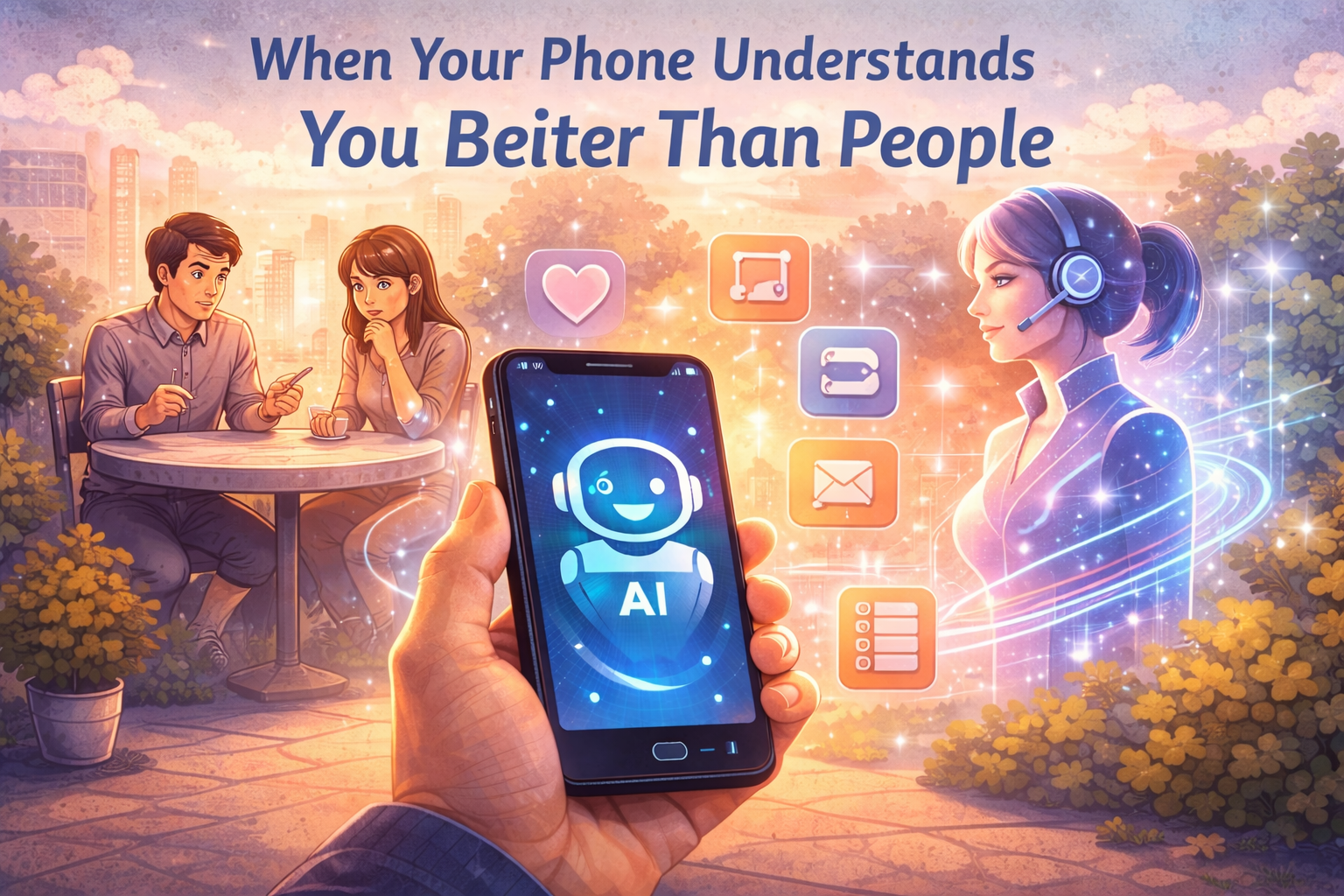
In 2026, smartphones have reached a point where they seem to understand users in ways that feel surprisingly personal. This does not mean phones have emotions like humans, but they are now very good at recognizing patterns, habits, and preferences. Because of this, many people feel that their phones understand them better than others around them.
This shift is not about replacing human relationships. Instead, it shows how advanced technology has become in learning from daily behavior and offering support in a consistent and reliable way.
Learning From Your Daily Behavior
One of the main reasons smartphones feel so understanding is their ability to learn from everyday actions. Your phone observes how you use it throughout the day and builds a clear picture of your routine.
It learns things like:
- When you wake up and go to sleep
- Which apps you open first
- How often you check messages or social media
Over time, this information allows your phone to predict your needs. It may suggest apps, reminders, or actions based on your habits. This makes interactions faster and more convenient.
Consistency That Humans Cannot Match
Unlike people, smartphones are always consistent. They do not forget your preferences or change their behavior randomly. If you like something, your phone remembers it and continues to support you in the same way.
For example, if you prefer a certain type of music, your phone will keep recommending similar songs. If you usually check emails at a specific time, it will prepare them for you.
This consistency creates a sense of reliability. Users know their phone will respond in a predictable and helpful way every time.
Understanding Context and Situation
Smartphones in 2026 are not just learning habits—they are also understanding context. They can recognize where you are, what you are doing, and what you might need next.
For example:
- When you are at work, your phone may reduce distractions
- When you are traveling, it may suggest navigation or updates
- When you are relaxing, it may recommend entertainment
This awareness allows smartphones to respond in ways that feel appropriate for each situation.
Personalized Suggestions That Feel Accurate
Another reason phones feel so understanding is their ability to give personalized suggestions. These suggestions are based on your behavior, preferences, and past actions.
Instead of showing random options, your phone offers choices that match your interests. Whether it is music, videos, shopping, or even daily tasks, the suggestions feel relevant.
This reduces the need to search or decide, making life easier and more efficient.
Emotional Awareness Through Data
While smartphones do not have real emotions, they can still detect certain patterns related to mood. For example, they may notice changes in activity, sleep patterns, or usage behavior.
Based on this, your phone might:
- Suggest relaxing music
- Remind you to take a break
- Offer wellness tips
These features create a feeling that the device understands not just your actions, but also your state of mind.
Always Available Support
One key difference between smartphones and people is availability. Your phone is always there when you need it. It does not get tired, busy, or distracted.
You can rely on it to:
- Set reminders instantly
- Answer questions anytime
- Help you organize your day
This constant availability makes smartphones feel like dependable assistants that are always ready to help.
Reducing the Need to Explain
When interacting with people, you often need to explain your needs clearly. But with smartphones, this process is becoming simpler.
Because your phone already knows your habits and preferences, you do not always need to explain everything. It can understand what you want with minimal input.
For example, typing just a few words in a search bar can bring up exactly what you need. Voice assistants can also understand incomplete or natural sentences.
Building a Personal Connection
Even though smartphones are machines, users often develop a sense of connection with them. This happens because the device feels personal and tailored to individual needs.
It remembers your choices, supports your routine, and helps you stay organized. Over time, this creates a sense of familiarity and trust.
While this is not the same as human connection, it still plays an important role in daily life.
The Balance Between Technology and Humanity
It is important to understand that smartphones are not meant to replace human understanding. They are tools designed to support and assist users.
Human relationships involve emotions, empathy, and deeper communication that technology cannot fully replicate. However, smartphones can still provide practical support that complements these relationships.
The goal is to use technology in a way that enhances life without replacing real human interaction.
Looking Ahead
As technology continues to evolve, smartphones may become even better at understanding users. Future devices might offer more accurate suggestions, improved context awareness, and deeper personalization.
However, the focus will remain on making life easier, not more complicated. The aim is to create devices that support users quietly and effectively.
Conclusion
In 2026, smartphones feel like they understand users better than ever before. Through learning behavior, recognizing context, and offering personalized support, they provide a level of consistency and convenience that is hard to match.
While they cannot replace human understanding, they play an important role in daily life. They act as reliable companions that help users stay organized, informed, and connected.
This growing understanding is what makes modern smartphones feel more personal than ever.