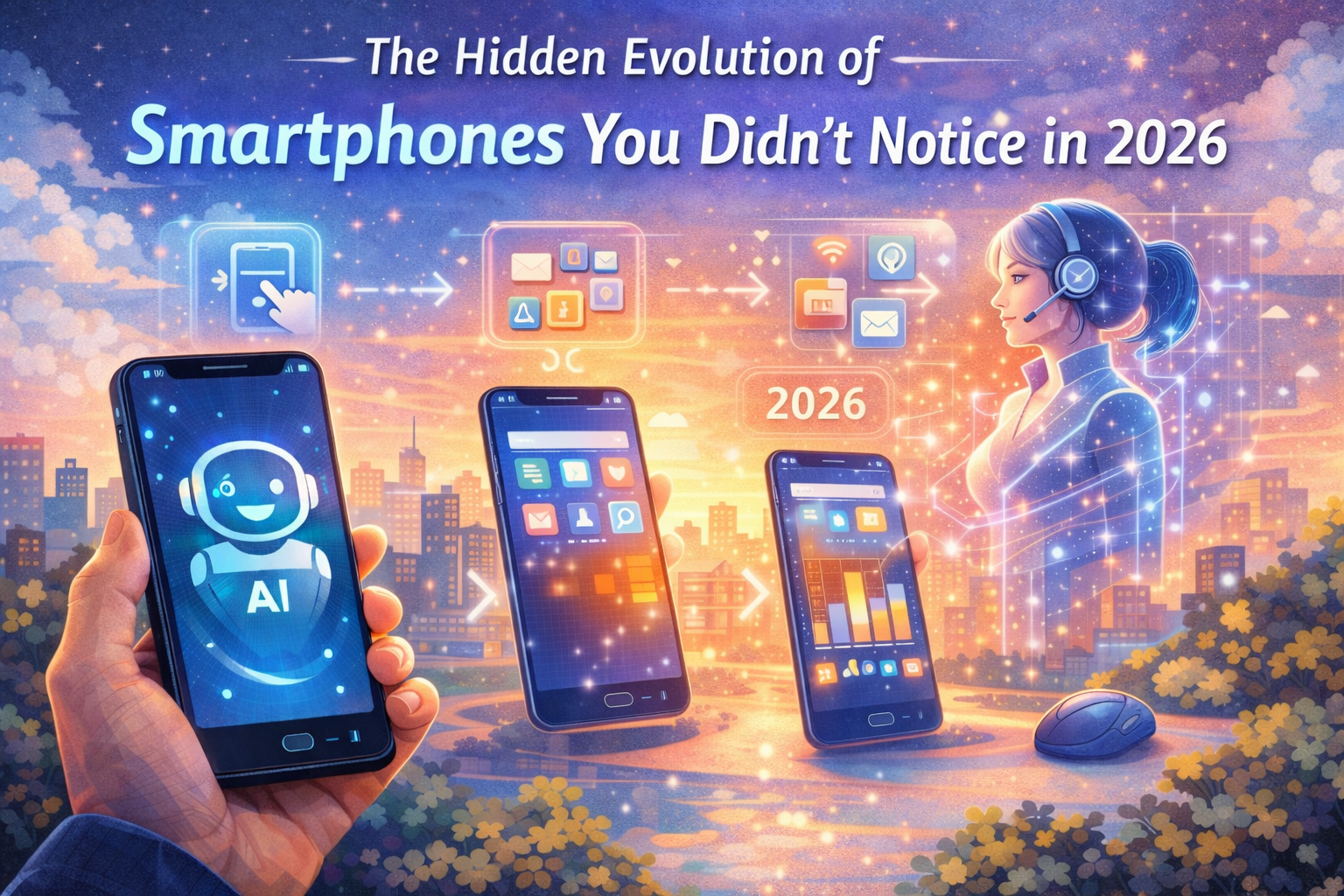
In 2026, smartphones did not suddenly look different, but they started to feel very different. There were no dramatic design changes or completely new shapes that shocked users. Instead, the real transformation happened quietly in the background. This hidden evolution is what makes modern smartphones more powerful, smarter, and easier to use without most people even realizing it.
Many users focus on visible features like camera quality or screen size. However, the biggest improvements in 2026 are not always visible. They exist inside the system, shaping how the device works and how it interacts with the user.
From Features to Experience
One of the biggest changes in smartphones is the shift from adding features to improving overall experience. In the past, companies competed by offering more features. Now, the focus has moved toward making everything work smoothly together.
Instead of giving users more options, smartphones are now designed to reduce confusion. They simplify tasks, organize information better, and make interactions feel natural. This change may not be obvious at first, but it greatly improves how people use their devices daily.
Smarter Systems in the Background
Modern smartphones in 2026 rely heavily on intelligent systems that work quietly behind the scenes. These systems use artificial intelligence to learn how users behave and then adjust accordingly.
For example, your phone may learn:
- When you usually check messages
- Which apps you use most often
- How you interact with notifications
Based on this, the phone optimizes performance, battery usage, and app behavior. It ensures that the apps you need are ready when you open them, while less important processes stay in the background.
Battery Optimization Without Effort
Battery life has always been a major concern for smartphone users. In 2026, this issue is handled more intelligently than ever before. Instead of relying only on bigger batteries, phones now manage power usage more efficiently.
Your device studies how you use it throughout the day and adjusts power consumption accordingly. For example, it may limit background activity for apps you rarely use or reduce performance when full power is not needed.
This means you get longer battery life without changing your habits. The improvement feels natural because it happens automatically.
Seamless App Integration
Another hidden change is how apps work together. In earlier years, apps often operated separately. Users had to switch between them and manage everything manually. But now, smartphones allow apps to share information and work together smoothly.
For example, your calendar, email, and messaging apps may connect to provide better reminders and updates. If you receive an event invitation, your phone can automatically add it to your schedule and notify you at the right time.
This level of integration reduces effort and creates a more connected experience.
Improved Security Without Complexity
Security has become stronger, but also simpler for users. In the past, protecting your phone required multiple steps and settings. Now, most security features work automatically.
Modern smartphones include:
- Biometric authentication like fingerprint and face recognition
- Automatic threat detection
- Secure data storage
These systems protect your information without requiring constant attention. You stay safe without needing technical knowledge, which makes the experience more user-friendly.
More Natural User Interaction
Interaction with smartphones has become more intuitive. Users no longer need to learn complex steps to perform actions. Gestures, voice commands, and smart suggestions make everything easier.
For instance, your phone may suggest actions based on what you are doing. If you copy text, it might offer to share or save it. If you take a screenshot, it may suggest editing or sending it.
These small improvements make the device feel responsive and intelligent.
Invisible Performance Improvements
Performance in 2026 smartphones is much better, but users may not always notice it directly. Apps open faster, multitasking is smoother, and the system runs without lag.
However, these improvements are often invisible because they focus on removing problems rather than adding noticeable changes. You do not see the performance—you feel it through a smoother experience.
This is one of the most important aspects of hidden evolution. The goal is not to impress users with numbers, but to make everything work effortlessly.
Personalization Without Effort
Smartphones now personalize the experience without requiring manual setup. They learn from your behavior and adjust automatically.
For example:
- Rearranging apps based on usage
- Suggesting content based on interests
- Adjusting settings based on time and activity
This level of personalization makes the phone feel unique to each user. It adapts to you instead of forcing you to adapt to it.
Reducing User Effort
The overall goal of modern smartphones is to reduce effort. Many tasks that once required multiple steps are now simplified or automated.
Examples include:
- Auto-filling information
- Smart replies to messages
- Automatic updates and maintenance
These features save time and make daily interactions easier. Users can focus on important tasks while the phone handles smaller details.
A Shift Toward Invisible Technology
One of the most important trends in 2026 is the rise of invisible technology. This means technology that works in the background without drawing attention.
Instead of showing off features, smartphones now focus on making those features feel natural and effortless. The best technology is the one you do not notice because it works perfectly.
This shift represents a new direction in mobile innovation, where simplicity and ease of use are more important than complexity.
Conclusion
The evolution of smartphones in 2026 is not always visible, but it is deeply impactful. From smarter systems and better battery management to seamless integration and improved security, many changes are happening behind the scenes.
These hidden improvements are what make modern smartphones feel more advanced, even if they look similar to older devices. The focus is no longer just on adding features, but on creating a smooth, intelligent, and effortless user experience.
This quiet transformation is shaping the future of mobile technology, making devices smarter without making them more complicated.